What is the use of heat pipes and cooling fins? Understand the design of notebook cooling
In the cooling module of the notebook, the three most critical elements are the heat pipe, the cooling fan and the cooling fins, in addition to the elements used to improve the contact area between them and the efficiency of heat conduction.
Hidden mediation and filling layer
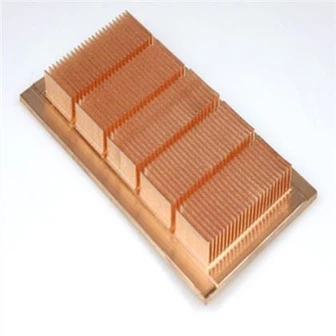
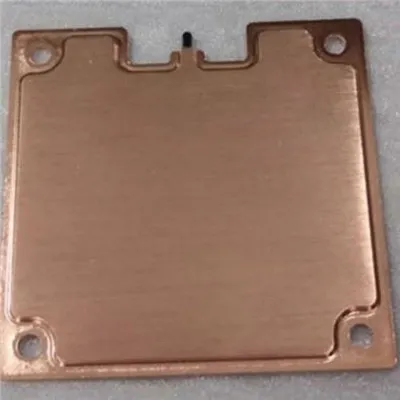
Many notebooks are covered with a layer of copper heat sink on the surface of chips such as CPU, GPU, video memory and power supply module. As the "intermediary" between the chip and the heat pipe, its primary task is to quickly "pull heat" out of the chip body. , It also has the effect of increasing the contact area and expanding the heat dissipation area.
In fact, there is a layer of thermal grease as a filler between the chip and the heat sink, and between the heat sink and the heat pipe. For a truly "exquisite" heat dissipation design, the surface of the heat sink and heat pipe should also be finely polished— —The surface of copper heat sinks and heat pipes is generally very rough, which will affect its full contact with thermal grease on a microscopic level.
But after using CNC and other processes to polish and polish the metal surface, you can maximize the contact area between them and the thermal grease, so that the heat conduction can be realized with 100% efficiency.
At this point, in the process of "CPU/GPU → thermal grease → heat sink → heat pipe", the notebook's heat dissipation journey has been halfway, and the next step is how to "wipe out" the heat outside the fuselage.
The heat pipe is filled with condensate (such as pure water). The working principle is that the high temperature on the surface of the chip will convert the liquid at the evaporating end of the heat pipe into steam (the boiling point is very low under vacuum) and move along the cavity to the end of the heat pipe (Condensing side).
Due to the relatively low temperature in this area, the hot steam will soon be reduced to liquid and flow back to the original position along the inner wall of the heat pipe through capillary action, completing the heat transfer over and over again.
Unlike the cylindrical heat pipes used in desktop processors and graphics cards, the internal space of the notebook is extremely limited. The core structure of the heat pipe must be flattened from the cylindrical shape before it can be inserted. Uneven or excessive flattening will cause It hinders the transfer of liquid in the tube core, and excessive bending will also affect the diversion effect.