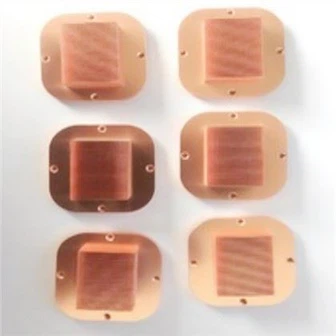
The main thermal management solutions of power supply
Thermal management obeys the basic principles of physics. There are three ways of heat conduction: radiation, conduction and convection.
For most electronic systems, to achieve the required cooling is to first let the heat leave the heat source by conduction, and then transfer it to other places by convection.
When performing thermal design, it is necessary to combine various thermal management hardware to effectively achieve the required conduction and convection.
There are three most commonly used cooling components: heat sinks, heat pipes and fans.
The heat sink and heat pipe are passive cooling systems without power supply, while the fan is an active forced air cooling system.
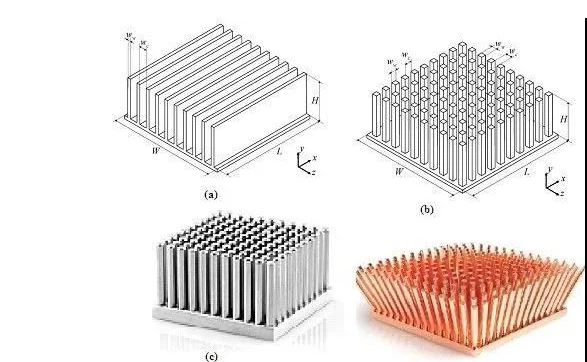
The radiator is an aluminum or copper structure that can obtain heat from a heat source through conduction and transfer the heat to the airflow (in some cases, to water or other liquids) to achieve convection.
Heat sinks come in thousands of sizes and shapes, from small stamped metal fins that connect a single transistor to large extrusions with many fins (fingers) that can intercept convective air flow and transfer heat to it.
The radiator has the advantages of no moving parts, operating costs, failure modes, etc.
Once the radiator is connected to the heat source, as the warm air rises, convection will naturally occur, thus starting and continuing to form an air flow.
Although the radiator is easy to use, there are some drawbacks:
The radiator that transmits large heat is large, costly, and heavy, and must be placed correctly, which will affect or limit the physical layout of the circuit board;
The fins may be blocked by dust in the airflow, reducing efficiency;
It must be properly connected to the heat source so that the heat can flow from the heat source to the radiator smoothly.
Heat pipe
It is another important component of the thermal management suite, which can transfer heat from point A to point B without any form of active forcing mechanism.
It contains a sintered core and a sealed metal tube of working fluid. It does not act as a radiator by itself. Its function is to absorb heat from the heat source and transfer it to a colder area.

Heat pipes can be used when there is not enough space near the heat source to place the radiator or the airflow is insufficient. The heat pipe has high working efficiency and can transfer heat from the source to a place that is more convenient to manage.
Its working principle is simple and ingenious:
The heat source converts the working fluid into steam in the sealed tube, and the steam transfers the heat to the colder end of the heat pipe. At this end, the vapor condenses into liquid and releases heat, while the fluid returns to the hotter end.
This gas-liquid transformation process runs continuously and is only driven by the temperature difference between the cold end and the hot end. Connecting a radiator or other cooling device at the cold end can solve the heat dissipation problem of local hot spots where airflow is blocked.
Fan
It is the first step towards a forced-air-cooled active heat sink, aside from passive radiators and heat pipes, but fans also have disadvantages:
high cost, need space, increasing the system noise;
Prone to failure, consume energy and affect the efficiency of the entire system
But in many cases, especially when the airflow path is curved, vertical or not smooth, they are usually the only way to obtain sufficient airflow.

The key parameter that defines the capacity of a fan is the unit length or unit volume flow rate of air per minute.
However, physical size is a problem: a large fan with a low rotation speed can produce the same airflow as a small fan with a high rotation speed, so there is a trade-off between size and speed.
Modeling and comprehensive simulation
Separate passive systems are larger in size, but more reliable and efficient, and fans can play a role in situations where passive cooling cannot be used alone.
Which system to choose for cooling is often a difficult decision.
At this time, it is necessary to determine how much cooling air is needed and how to achieve cooling through modeling and simulation, which is essential for efficient thermal management strategies.
For the miniature model, the heat source and its heat flow path are characterized by their thermal resistance, and the thermal resistance is determined by the material, quality and size used.
Modeling shows how heat flows from the heat source and is also the first step in evaluating components that cause thermal accidents due to their own heat dissipation.

For example, device suppliers such as high heat dissipation ICs, MOSFETs, and IGBTs usually provide thermal models that can provide details of the thermal path from the heat source to the surface of the device.
Once the thermal load of each component is known, the next step is to model at a macro level, which is both simple and complex:
Adjust the size of the air flow through various heat sources to keep its temperature below the allowable limit; use air temperature, unforced air flow available flow, fan air flow and other factors to perform basic calculations to roughly understand the temperature situation.
The next step is to use the model and location of each heat source, PC board, shell surface and other factors to perform more complex modeling of the entire product and its packaging.
Finally, modeling has to solve two problems:
The problem of peak and average dissipation. For example, a steady-state component with a continuous thermal dissipation of 1W and a device with a thermal dissipation of 10W but with a 10% intermittent duty cycle have different thermal effects.
That is to say, the average heat dissipation is the same, and the related heat mass and heat flow will produce different heat distributions. Most CFD applications can combine static and dynamic analysis.

The imperfection of the physical connection between the surface of the component and the miniature model, such as the physical connection between the top of the IC package and the heat sink.
If the connection has a small distance, the thermal resistance of this path will increase, and it is necessary to fill the contact surface with a thermal pad to enhance the thermal conductivity of the path.
Thermal management can reduce the temperature of the components in the power supply and the internal environment, which can prolong product life and improve reliability.
But thermal management is an integrated concept, if broken down to the minutiae, it is a huge subject.
It involves the trade-offs of size, power, efficiency, weight, reliability, and cost. The priority and constraints of the project must be evaluated.