The thermal solutions for photovoltaic inverter
When paying attention to the overall performance of the inverter, people pay the most attention to a series of usual issues such as conversion efficiency, maximum DC voltage, AC output power, and protection level. The thermal issue of the inverter is a problem that people may ignore, and thermal management is an essential part which needs to be paid attention to.
1. Why does the inverter need to dissipate heat?
1. The components in the inverter have a rated safe operating temperature. If the thermal performance of the inverter is relatively poor, when the inverter continues to work, the heat of the components has been collected inside the cavity, and its temperature will become higher and higher, Excessive temperature will reduce the performance and life of components, and the machine is prone to failure.
2. The inverter generates heat during operation, and power loss is unavoidable. For example, for a 5kW inverter, the system heat loss is about 75-125W, which affects the power generation. It is necessary to optimize the thermal design to reduce the heat dissipation loss.
2. Several ways for inverter to dissipate heat
At present, the cooling technologies of inverters include natural cooling, air forced cooling, and liquid cooling. The main application forms are natural cooling and air forced cooling.
1. Natural cooling: Natural heat dissipation refers to allowing local heating devices to dissipate heat to the surrounding environment without using any external auxiliary energy to achieve temperature control. Natural heat dissipation is suitable for low-power devices that do not require high temperature control.

2. Air forced cooling: The cooling method of air forced cooling is mainly a method of taking away the heat by a fan. At present, the material of the heat sink is mainly aluminum or copper.

3. How to choose a suitable cooling method for the inverter
In general, the allowable operating temperature rise of electronic devices is between 40-60 °C. In the case of a temperature rise of 60°C, the natural cooling can bear the maximum heat flux density of 0.05W/cm2. When the heat flux density is greater than 0.05W/cm2, the air forced cooling method is a good choice in terms of economy and performance. If the heat flux density continues to increase, other heat dissipation methods such as liquid cooling are required.
Therefore, for wind energy converters of several MW, liquid cooling is generally used; for centralized photovoltaic inverters of 100KW-1MW, air forced cooling is generally used; for string inverters with power less than 20KW, The best thermal solution is natural cooling. When it is greater than 25KW, forced air cooling is a more economical way.
4. Thermal design for inverter
The larger the heat dissipation area, the better the thermal performance
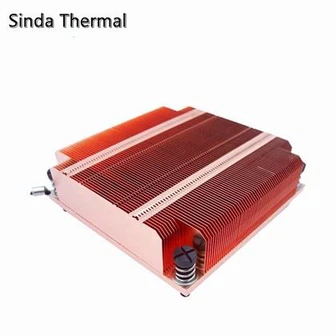
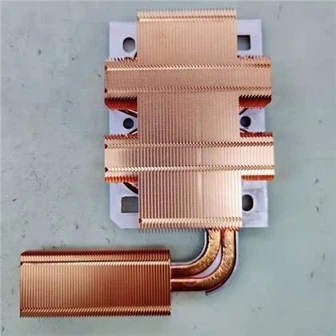
For example, the heating power of a 5kW inverter is about 125W, and the heat dissipation area is calculated to be 0.25m2 according to the maximum heat flux density 0.05W/cm2 that needs to be borne by natural cooling at 60°C. In order to keep the inverter volume unchanged, we usually design a heat sink with many fins to increase the contact area between the air and the radiator, so as to achieve better and faster heat dissipation.
Overall air duct design
The basic principles of air duct design are as follows:
· The outlet air duct ensures that the hot air can be discharged smoothly.
· Maximize the air velocity and flow between the hot teeth of the radiator;
· Reduce air duct wind resistance
Inductor external design
As shown in the figure below, the inductor can be placed externally, and the inductor can dissipate heat independently to reduce the temperature of the device cavity.

Sinda Thermal is professional thermal expert, we are offering many thermal solutions and heat sinks to the global customers, we can design the optimized performance heat sinks and manufacture them in house, our factory owns over 100 employees and many precise facilities and equipment. Please contact us freely if you have any thermal requirements.