The cooling method and precautions of photovoltaic inverters
Photovoltaic inverter is the core equipment of the photovoltaic system. The main role is to turn the DC electricity emitted by photovoltaic components into AC power that meets the requirements of the power grid.
The inverter is an electronics equipment, and is facing the challenge brought by temperature like all electronic products. Among the cases of all electronic products, up to 55%of the proportion of temperature is caused by temperature. Electronic components inside the inverter are also very sensitive to temperature. According to the 10 degrees of reliability theory, from room temperature, the temperature is half increased by half degrees, and the life span is halved, so the inverter cooling design is very important.
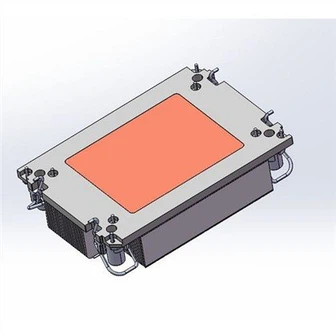
The inverter thermal system mainly includes materials such as heat sink, cooling fan, heat conduction silicon grease. At present, there are two main types of inverters: one is natural cooling, and the other is to air forced cooling.
Natural cooling
Natural cooling refers to the purpose of achieving partial heat dissipation to the surrounding environment without using any external auxiliary energy. This usually contains three main heat transfer methods: heat conduction, convection and radiation. The method of flow is mainly.
Natural heat dissipation or cooling is often suitable for low -power devices and components with low temperature control requirements and low heat flow density of device heat, as well as devices that should not use other cooling technologies with sealing or dense assembly.
Air forced cooling
Air forced cooling is mainly a way to take away the air flow of the peripheral of forced devices such as fans, so as to take away the calories emitted by the device.
This method is a simple and obvious heat dissipation method. If the space between the components in the component is suitable for air flow or is suitable for installing a radiator, you can use this cooling method as much as possible.
The method to improve the heat transfer ability of the forced convection is to increase the heat dissipation area and produce a relatively large forced convection heat transfer coefficient on the heat dissipation surface. Increasing the heat dissipation area of the radiator surface to enhance the heat dissipation of electronic components has been widely used in practical engineering.
Two ways of thermal cooling comparison
Natural cooling does not have a fan, low noise, but slow heat dissipation speed, generally used for small power inverters. Air forced cooling needs to configure the fan, the noise is large, but the heat dissipation speed is fast, which is generally used for high -power inverters.
The comparison experiment of the heat dissipation capacity of the group -type inverter found that it is found that the group -type inverter above 50kW power level is better than the natural cooling and cooling effect, which is better than the natural cooling heat dissipation method, the internal capacitance of the inverter, IGBT and other key components temperature Reducing around 20 ° C can ensure efficient work in the long life of the inverter. The temperature of the inverter using natural cooling rises, and the life span of components is reduced.
Pay attention to thermal management when installing the inverter
1, the inverter itself is a heating source, all the heat should be released in time, can not be placed in a closed space, otherwise the temperature will rise higher.
2, the inverter should be placed in an air circulation space, to avoid direct sunlight as far as possible.
3. When multiple inverters are installed together, enough distance should be left between inverters and inverters in order to avoid mutual influence.
Sinda Thermal is professional thermal expert, we are offering many thermal solutions and heat sinks to the global customers, we can design the optimized performance heat sinks and manufacture them in house, our factory owns over 100 employees and many precise facilities and equipment. Please contact us freely if you have any thermal requirements.