Thermal Design Of SBC power supply
Single board computer (SBC) represents an easy integrated solution to many control problems. The popularity of this idea has led to a surge in the number of SBC products on the market, which cover a wide range of performance and cost requirements, from relatively simple microcontroller based solutions to complex but compact high-performance processors and field programmable hybrid gate arrays. In general, the need to package a large amount of computing performance into a small space poses challenges in the design of the shell and package, and has a chain effect on the power supply subsystem.

Heat has a direct impact on the performance of electronic systems. Electronic circuits, especially those used for power conversion and transmission, usually perform more efficiently at lower temperatures, and in turn tend to dissipate less energy in the form of waste heat. As the power output of the entire system increases, the efficiency gain that can be obtained by effective cooling significantly increases.

Cooler operation will also have a chain reaction on reliability. If the system is operated at a lower temperature, the probability of their failure within a given time will be reduced. These factors make it important to consider all possibilities when looking at power supply design options, such as cooling and load versus efficiency curves. There are three main ways of heat dissipation for electronic units such as power supply: radiation, convection and conduction. For electronic systems used in most environments, convection and conduction are the most important.

Through convection, when energy is transferred from solid components of the system to air molecules, heat will be transferred from the power supply. The heat loss rate is proportional to the speed of air flowing through the system. Therefore, forced air cooling will provide a greater degree of cooling than the natural motion generated by the thermal assembly transferring energy to air molecules.

Conduction through the PCB substrate or the system chassis provides a further way to dissipate heat from the power supply, although it is traditionally considered less important than convection. In addition, in the SBC based system, it is also important that the heat of the power supply cannot be transferred to the processor complex, because it will increase the possibility that the device enters thermal shutdown to protect itself under high load conditions.

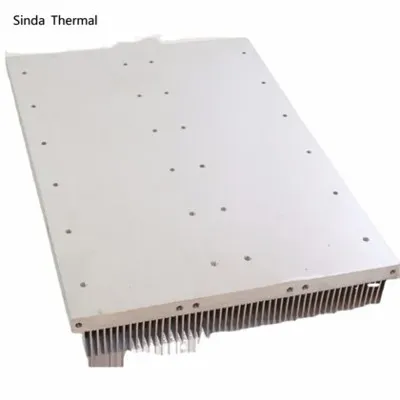
Generally, the high copper content of the PCB and the metal in the housing help provide a good path for heat to flow out from the power supply through conduction. Radiators installed outside the enclosure will help transfer heat from the system to places where it can be lost by convection. It is recommended to fill any gap between the equipment to be cooled with a thermally conductive adhesive and maximize the heat transfer from the equipment to the radiator. Bolts or clamps increase the contact pressure, which also improves heat transfer into the heatsink.

The direction of power supply in the system will also affect the cooling performance, depending on the layout of internal components. As the hot air tends to rise, the power supply installed under the SBC tends to transfer heat to the components in the processor complex. If the board is installed vertically and the PSU is on the side, the influence of hot air will be less. However, heat sensitive components may be better placed at the bottom of the unit.

When heatsinks are used internally, the fins of the largest heatsink shall be parallel to the air flow direction. Naturally, the airflow will be limited by obstacles, which needs to be considered. The way the air leaves the system will help determine the efficiency of the airflow. In order to prevent pressure accumulation and reduce the efficiency of the fan, the cross-sectional area of the air outlet should be at least 50% larger than the cross-sectional area of the inlet.

Considering these factors, by considering the thermal parameters designed around the whole system, designers can not only make full use of the availability of high-performance SBC, but also make full use of off the shelf power converters.