Thermal design principle of high power switching power supply
1. Why the electronic products need thermal solution
The chips of electronic products are highly integrated, with more and more functional requirements and smaller and smaller volume requirements. Today's components are rapidly developing towards miniaturization, high functionality, and high efficiency. High-performance components will generate a lot of heat at high speeds, and this heat must be removed immediately to ensure that the components can operate at normal operating temperatures. Operate at the highest efficiency. Therefore, the related technology of heat conduction is constantly challenged with the development of the electronic industry.
2. Types of heat sink materials:
Gold, silver, iron, copper, aluminum, aluminum alloy, silicone sheet, etc.
3. Principle of heat dissipation
The heat dissipation form of A radiator mainly includes radiation and convection.
Radiation heat transfer: heat energy is transmitted in the form of radiation, without any medium, it can be transmitted in a vacuum state, such as the heat energy of the sun is transmitted to the earth through the universe.
Convective heat transfer: Heat energy is transmitted through air or other media, such as convection radiators to heat the air. The air heats everything in the room, and the air movement mainly relies on the movement of the air to spread the heat energy.
Radiation radiators in the traditional sense refer to radiators that account for a relative share of the total heat dissipation. At present, the most typical radiant radiators are cast iron, steel column radiators, and copper-aluminum composite radiators. And so on, among them, the heat energy transmitted by radiation only accounts for 30%, and the other 70% heat energy is transmitted by convection. The convection radiator is a radiator with basically no radiation heat exchange (or very small), such as the Fried copper tube convection radiator. It heats up more comfortably and faster than a radiant radiator.
B. The methods of heat dissipation include radiation heat dissipation, conduction heat dissipation, convection heat dissipation, and evaporative heat dissipation.
The heat generated by various tissues and organs of the body is evenly distributed to all parts of the body along with the blood circulation. When blood flows through the blood vessels of the skin, 90% of the total heat is dissipated by the skin, so the skin is the main part of the body to dissipate heat. There is also a small part of the heat, which is dissipated from the body through the lungs, kidneys and digestive tract with the respiration, urine and feces.
(1) The way of heat dissipation - mainly the physical way
1. Radiation Radiation means that the body dissipates heat by emitting infrared rays. When the skin temperature is higher than the ambient temperature, the body's heat is dissipated by radiation. Radiation heat dissipation is related to factors such as skin temperature, ambient temperature and effective radiation area of the body. In general, radiation heat dissipation accounts for 40% of the total heat dissipation. Of course, if the ambient temperature is higher than skin temperature, the body will absorb radiant heat. Steel workers work in front of furnaces, as do farmers working in fields under the sun in the hot summer.
2. Conduction and Convection Conduction is the way the body dissipates heat by transferring molecular kinetic energy. When the human body is in direct contact with objects that are cooler than the skin (such as clothes, beds, chairs, etc.), heat is transferred from the body to these objects. Clinically, the use of ice caps, ice packs and other methods to cool patients with high fever uses this principle.
C, the heat exchange between the radiator and the environment
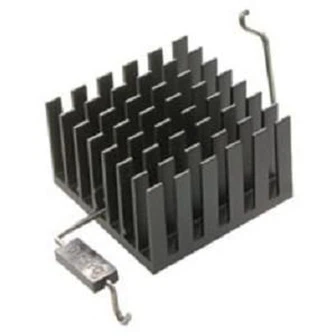
After the heat is transferred to the top of the radiator, it is necessary to dissipate the transmitted heat to the surrounding environment as soon as possible. For the air-cooled radiator, it is to exchange heat with the surrounding air. At this time, heat is transferred between two different media, and the formula followed is Q=α X A X ΔT, where ΔT is the temperature difference between the two media, that is, the temperature difference between the radiator and the surrounding air; and α is the temperature difference of the fluid. Thermal conductivity, after the heat sink material and air composition are determined, it is a fixed value; the most important A is the contact area between the heat sink and the air. Under the premise that other conditions remain unchanged, such as the volume of the heat sink, there will generally be However, by changing the shape of the radiator, increasing the contact area with the air and increasing the heat exchange area, it is an effective means to improve the heat dissipation efficiency. , To achieve this, the surface area is generally increased by means of fin design supplemented by surface roughening or threads.
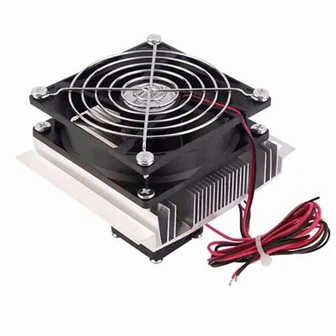
After the heat is transferred to the air, the temperature of the air in contact with the heat sink will rise rapidly. At this time, the hot air should take away the heat as much as possible with the surrounding cold air through heat exchange such as convection. For air-cooled radiators , the most important means is to increase the speed of air flow and use a fan to achieve forced convection. This is mainly related to the design of the fan and the wind speed. The efficiency of the radiator fan (such as flow, wind pressure) mainly depends on the diameter of the fan blade, the axial length, the speed of the fan and the shape of the fan blade. The flow of the fan is mostly in CFM (Imperial system, cubic feet/minute), and a CFM is about 0.028mm3/minute flow.
Pure aluminum radiator
Pure aluminum radiator is the most common radiator in the early days. Its manufacturing process is simple and the cost is low. So far, pure aluminum radiator still occupies a considerable part of the market. In order to increase the heat dissipation area of its fins, the most commonly used processing method for pure aluminum radiators is aluminum extrusion technology, and the main indicators for evaluating a pure aluminum radiator are the thickness of the radiator base and the Pin-Fin ratio. Pin refers to the height of the fins of the heat sink, and Fin refers to the distance between two adjacent fins. The Pin-Fin ratio is the height of the Pin (excluding the thickness of the base) divided by the Fin. The larger the Pin-Fin ratio, the larger the effective heat dissipation area of the radiator, and the more advanced the aluminum extrusion technology.
Pure copper radiator
The thermal conductivity of copper is 1.69 times that of aluminum, so under the premise of other conditions being the same, pure copper heat sinks can take heat away from the heat source faster. However, the texture of copper is a problem. Many advertised "pure copper heat sinks" are not really 100% copper. In the list of copper, those with a copper content of more than 99% are called acid-free copper, and the next grade of copper is Dan copper with a copper content of less than 85%. Most of the pure copper heat sinks on the market currently have a copper content between the two. The copper content of some inferior pure copper radiators is not even 85%. Although the cost is very low, its thermal conductivity is greatly reduced, which affects the heat dissipation. In addition, copper also has obvious shortcomings, such as high cost, difficult processing, and too much mass of the heat sink, which hinder the application of all-copper heat sinks. The hardness of red copper is not as good as that of aluminum alloy AL6063, and the performance of some mechanical processing (such as grooving) is not as good as that of aluminum; the melting point of copper is much higher than that of aluminum, which is not conducive to extrusion forming (ExtrusiON) and so on.
Although the most commonly used heat sink materials are copper and aluminum alloys, aluminum alloys are easy to process and low in cost, and are the most widely used materials. The higher thermal conductivity of copper makes its instantaneous heat absorption ability better than that of aluminum alloys. The speed is slower than that of aluminum alloy. Therefore, no matter pure copper, pure aluminum, or aluminum alloy radiator, there is a fatal flaw: because only one material is used, although the basic heat dissipation capacity can meet the needs of mild heat dissipation, it cannot well balance the heat conduction. The two requirements of capacity and heat capacity are somewhat overwhelmed in occasions with high heat dissipation requirements.
Copper-aluminum bonding technology
After considering the respective shortcomings of copper and aluminum, some high-end radiators in the market often use copper-aluminum combination manufacturing processes. These heat sinks usually use copper metal bases, while heat sink fins are made of aluminum alloy. Of course, In addition to the copper base, there are also methods such as the use of copper pillars for the heat sink, which is also the same principle. With high thermal conductivity, the copper bottom surface can quickly absorb the heat released by the CPU; the aluminum fins can be made into the most favorable shape for heat dissipation by means of complex processes, and provide a large heat storage space and release it quickly. A balance has been found in all aspects.
The heat is dissipated from the CPU core to the surface of the heat sink, which is a heat conduction process. For the base of the heat sink, since it is in direct contact with a small area of high heat source, it is required that the base can quickly conduct heat away. The use of materials with higher thermal conductivity for the heat sink is very helpful to improve the thermal conductivity. It can be seen from the comparison table of heat conduction system that, for example, the thermal conductivity of aluminum is 237W/mK, and the thermal conductivity of copper is 401W/mK. Comparing radiators of the same volume, the weight of copper is 3 times that of aluminum, while the specific heat of aluminum is 3 times. It is only 2.3 times that of copper, so under the same volume, a copper radiator can hold more heat than an aluminum radiator and heat up more slowly. With the same thickness of the heat sink base, copper can not only quickly remove the temperature of heat sources such as CPU Die, but also its own temperature rise is slower than that of aluminum heat sinks. Therefore, copper is more suitable for making the bottom surface of the heat sink.
However, the combination of these two metals is relatively difficult, and the affinity between copper and aluminum is poor. thermal resistance). In actual design and manufacturing, manufacturers always try to reduce the interface thermal resistance as much as possible and avoid weaknesses, which often reflects the manufacturer's design capabilities and manufacturing processes.
4. Thermal medium - thermally conductive silica gel.
a. What is thermal resistance?
The so-called "thermal resistance" (thermal resistance) refers to a comprehensive parameter that reflects the ability to prevent heat transfer. The concept of thermal resistance is very similar to that of resistance, and the unit is also similar - °C/W, that is, the temperature difference between the two ends of the heat conduction path when the continuous heat transfer power of the object is 1W.
b. The thermal resistance of air is the largest in nature, and its value is close to 0.03W/mK;
c. Fill the gap between the heating body and the metal heat sink to reduce the air, so that the heating body and the heat sink show direct convection heat dissipation.
d. The thermally conductive silicone sheet can also dissipate heat indirectly, that is, it is exposed outside, so it is called a heat sink.
Sinda Thermal is a leading heat sink manufacturer, we own a team of thermal experts and many precise facilities and equipment, we can off the most competitive quote and great quality heat sinks. Please contact us freely if you have any thermal requirements.