Thermal management for EV battery
New energy vehicle is a project supported by China. It has developed rapidly in recent years. The whole vehicle technology and parts technology of electric vehicle are also constantly innovated, and new technologies and processes are constantly introduced. In the field of heat dissipation , the key point of heat dissipation of electric vehicles lies in the heat dissipation of power battery packs and controllers. Doing a good job in thermal design of these two pieces is also a necessary guarantee for the stable operation of electric vehicles.

The safe operation of batteries highly depends on environmental temperature. The working temperature of lithium batteries is 0-50 ℃, and the optimal working temperature is 20-40 ℃. If the temperature exceeds 50 ℃, the heat accumulation of the battery pack will directly affect the battery life. When the battery temperature exceeds 80 ℃, it may cause the battery pack to explode. In 2023. The sales volume of electric vehicles in China is as high as 9.4 million units. Therefore, in order to reduce the occurrence of social safety accidents, the thermal management design of batteries, which are the core components of electric vehicles, is particularly important.

The battery thermal management system includes active and passive modes, and active thermal management includes air cooling, liquid cooling, and refrigerant cooling; Passive thermal management includes natural cooling, heat pipe cooling, and phase change materials. The thermal management technology of lithium batteries mainly includes four types: air cooling, liquid cooling, heat pipe cooling, and phase change cooling.
Air cooling uses air as a heat exchange carrier to control and distribute the internal temperature of the power battery system. According to the heat dissipation and ventilation methods, air cooling can be divided into serial ventilation and parallel ventilation. Air cooling technology has drawbacks such as low thermal conductivity and poor control effect on the uniformity of battery pack temperature. Due to the trend of high energy density development in power lithium batteries, air cooling is gradually becoming difficult to meet the requirements of thermal management technology.

Liquid cooling uses coolant as a heat exchange carrier to control and distribute the internal temperature of the power battery system. This system usually uses water pumps and pipelines to complete the flow of coolant within the battery system. Liquid cooling has advantages such as high cooling efficiency, high thermal conductivity, and can improve the temperature consistency of the battery pack. However, liquid leakage may cause battery short circuits, so high sealing requirements are required for liquid cooling, which is a safety issue in liquid cooling. At the same time, liquid cooling will increase the weight of the entire lithium battery system, which is not conducive to the lightweight trend of power lithium batteries.

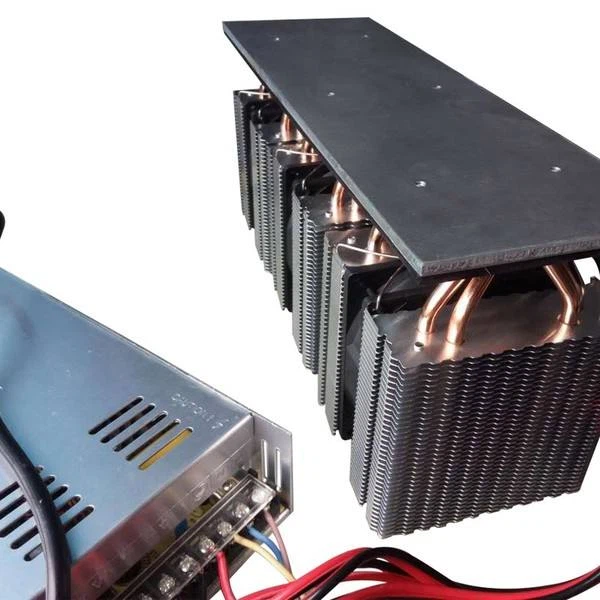
Heat pipe cooling is a thermal management system that utilizes phase change to achieve heat conduction. The heat pipe consists of an evaporation section, an insulation section, and a condensation section. The medium inside the sealed air duct will absorb the heat generated by the battery during the evaporation stage, and then transfer the heat to the external environment through the condensation section, achieving the effect of quickly cooling the battery pack.
Phase change materials are materials that can change their physical state within a certain temperature range. Phase change cooling has the advantages of fast heat dissipation, high temperature uniformity, and low-temperature insulation. It can also improve the physical and chemical properties by combining phase change materials with other materials according to the type of phase change material. The use of phase change materials for cooling can reduce the space occupied by the battery system without consuming additional energy from the battery. But there are also drawbacks such as low thermal conductivity and easy leakage. If phase change cooling is combined with other thermal management methods to timely dissipate the heat absorbed by phase change materials into the external environment, the cooling effect of phase change materials can be sustainably utilized.

Currently, in the iteration of electric vehicles, technological innovation in battery thermal management is always placed in a very important position. In the future, electric vehicle battery thermal management systems will continuously break through in multiple aspects, including improving efficiency, reducing costs, and enhancing intelligence.