What are the challenges in developing autonomous driving chips
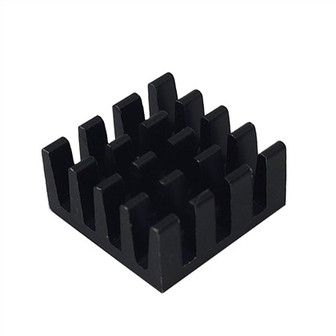
5G era means a new era of information technology of all things. ADAS may become the standard configuration of vehicles. With the progress of science and technology, its functions are more and more, and the chip performance requirements will be continuously enhanced, which will bring serious thermal management problems.

The development of autonomous driving technology requires an exponential increase in computing power. High level auto drive system needs to process data from multiple sensors in parallel, including camera, radar, laser radar (LiDAR), etc. Chips must have high-speed computing and data processing capabilities to complete complex perception, decision-making, and control tasks in milliseconds. This means that chip manufacturers need to constantly innovate and adopt cutting-edge technologies such as ASICs (Application Specific Integrated Circuits), FPGAs (Field Programmable Gate Arrays), and GPUs (Graphics Processing Units) to meet these needs. The challenge faced by chip designers is how to balance performance and energy efficiency, as powerful performance often comes with high energy consumption. This requires the chip not only to have superior computing power, but also to consider the energy efficiency ratio in the design to ensure the endurance of the auto drive system.

The safety of autonomous vehicle is one of the most concerned problems of the public. As the core of the system, the safety of the chip is crucial. The autopilot chip needs to have the ability of fault self inspection and fault tolerance to ensure that the whole system can still operate safely when a single module fails. In addition, with the popularity of autonomous vehicle, system security vulnerabilities may become the target of hacker attacks. Therefore, the chip should also have a solid security protection mechanism, including preventing unauthorized code or data injection, and ensuring the privacy and integrity of data. Developing chips that can resist physical and network attacks while maintaining continuous and stable system operation has put forward higher requirements for chip design and production.

For electric autonomous vehicle, power consumption control is particularly important, because it is directly related to the vehicle range. Chip design needs to optimize energy consumption by adopting low-power design techniques, clock gating, dynamic voltage regulation, and other methods to reduce the energy consumption of the chip in various operating modes. Efficient algorithm optimization is also the key to reducing power consumption, requiring close cooperation between algorithm engineers and hardware designers to achieve the best match between algorithms and hardware. In addition, thermal design is equally important for power management, especially in compact car environments where heat dissipation solutions need to consider space limitations, heat dissipation capacity, and system stability.

Although the auto drive system needs high-performance chips, this should not lead to excessive cost increase. Mass production of autonomous vehicle needs to control the cost within a reasonable range, making these vehicles still attractive to consumers. Cost control requires the design, manufacturing, and packaging processes of chips to be economically efficient. In addition, with the development of technology, existing hardware may need to be upgraded or replaced. How to design chips that are easy to upgrade and cost-effective is also a problem that R&D personnel need to consider.

The challenge of autonomous vehicle chip research and development is multifaceted, involving technology, cost, law and other fields. Only when the industry standards are met in all aspects can the safety, reliability and popularity of autonomous vehicle be ensured.