AIGC Accelerates the Explosion of Chip Level Liquid Cooling Market
AIGC drives high demand for computing power. AIGC is based on big models and big data. The generative model/multimodal approach in AIGC mainly requires intelligent computing power. In 2021, the total scale of global computing equipment computing power/intelligent computing power is 615/232EFlops, and it is expected to increase to 56/52.5ZFlops by 2030, with CAGR65%/80%; The doubling time of average computing power has been reduced to 9.9 months.

Chip level liquid cooling has become the mainstream cooling solution. The increase in power consumption drives the upgrading of cooling requirements: Intel CPU power consumption exceeds 350W, NVIDIA GPU power consumption exceeds 700W, and AI cluster computing power density generally reaches 50kW/cabinet. Air cooling and heat dissipation have reached the capacity ceiling: cabinet power exceeding 15kW is the air cooling capacity ceiling, and the thermal conductivity of liquid is 15-25 times that of air. There is an urgent need to upgrade liquid cooling. Cooling is increasingly close to the core heat source: it is expected to evolve from room level, cabinet level, and server level to chip level. Strict policy regulation accelerates the infiltration of liquid cooling: The energy consumption of temperature control systems is one of the key factors in reducing PUE. Under the dual carbon background, the PUE requirement for the East Digital West Computing node is below 1.25/1.2.

Behind the improvement of computing power, chips must have higher computing efficiency and complete more calculations in a shorter time, which inevitably leads to an increase in chip energy consumption. According to the ODCC "White Paper on the Reliability of Cold Plate Liquid Cooled Servers", in 2022, the single CPU power consumption of Intel's fourth generation server processor has exceeded 350 watts, the power consumption of NVIDIA's single GPU chip has exceeded 700 watts, and the AI cluster computing power density has generally reached 50 kW/cabinet. The operating temperature of a chip significantly affects its performance, and an increase in power density significantly increases the heat flux density of the chip, resulting in an increase in chip temperature. In traditional chips, 98% of the volume is used for cooling, and only 2% is used for calculation and operation. However, it is still difficult to solve the current heat dissipation problem. With the continuous and rapid improvement of chip performance, the heat dissipation problem will become increasingly prominent.

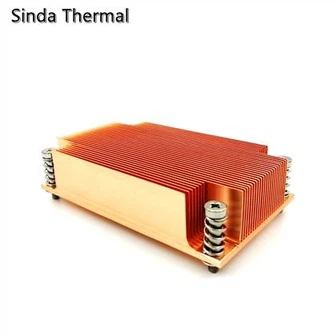
In the selection of cooling media, there is also a further trend towards selecting cooling media with better cooling efficiency. According to CDCC data, the thermal conductivity of liquids is 15-25 times that of air. With the increase in thermal density, liquid cooling is expected to replace air cooling to achieve more efficient heat dissipation. According to the Intel white paper "Innovative Practice for Green Data Centers - Cold Plate Liquid Cooling System Design Reference", data centers that use air cooling can usually solve cabinet cooling within 12kW, with cabinet power exceeding 15kW. Compared to existing air-cooled data centers, the ceiling of air flow heat dissipation capacity has been reached, and liquid cooling technology, as a technology with stronger heat dissipation capacity, can support higher power density.

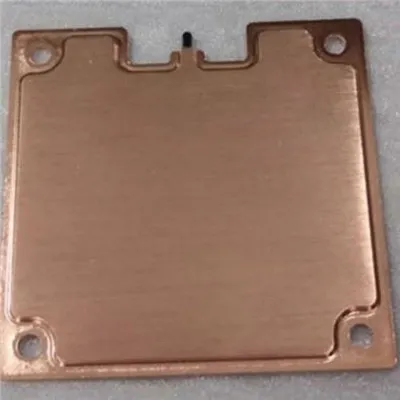
The current chip level heat dissipation solutions mainly include liquid cooling technology, phase change heat storage heat dissipation technology, evaporative cooling technology, etc. Liquid cooling technology is one of the important chip level heat dissipation solutions and is expected to become the mainstream in the future. In liquid cooling technology, it covers cold plates, immersion, spraying, etc. Currently, the development of cold plate and immersion type is relatively mature compared to spray type.

Driven by AIGC, the future growth of AI servers continues to be optimistic. According to IDC data, the global AI server market size in 2021 was 15.6 billion US dollars, and it is expected that the global AI intelligent server market will reach 31.8 billion US dollars by 2025, with a CAGR of 19.5%; In 2021, the scale of China's AI server market reached 35 billion RMB , and it is expected that the scale of China's AI server market will reach 70.2 billion RMB by 2025, with a CAGR of 19.0%. AIGC is expected to further accelerate the growth of AI servers.