Analysis of the data center liquid cooling and coolant industry
With the innovative development of technologies such as artificial intelligence, cloud computing, big data, and blockchain, the era of 5G communication characterized by high speed, low latency, and large connectivity has arrived. As information infrastructure, data centers and communication equipment are bearing an increasing amount of computing load, and the requirements for computing efficiency are also increasing.

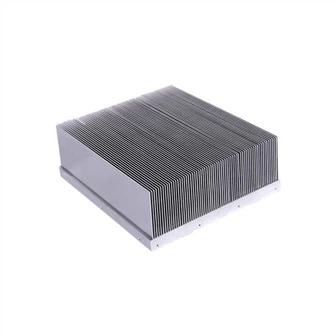
In order to meet the challenges of network processing performance, data center servers and communication devices continuously improve their processing capabilities and integration, resulting in a continuous increase in power density. These changes not only bring about huge energy consumption issues, but also higher requirements for refrigeration equipment and technology due to high heat density. Traditional air cooling technology presents a bottleneck in the face of high heat density scenarios, and the heat dissipation efficiency can no longer keep up with the computational efficiency. In this context, liquid cooling technology has attracted widespread attention in the industry due to its ultra-high energy efficiency, ultra-high heat density, and other characteristics. Liquid cooling technology is the only way to solve the challenges of heat dissipation pressure and energy conservation.

The continuous increase in computing power promotes the growth of power density, posing new requirements for refrigeration technology. The continuous increase in computing power promotes the continuous improvement of communication equipment performance, and chip power consumption and heat flux density are also continuously increasing. The power density of each generation of product evolution increases by 30-50%. The maximum power consumption of the contemporary X86 platform CPU is 300-400W, and the industry's highest chip heat flux density has exceeded 120W/cm2; The continuous improvement of chip power density directly restricts chip heat dissipation and reliability, and traditional air-cooled heat dissipation capabilities are becoming increasingly difficult to sustain. The rise in chip power density has also led to an increase in the power density of the entire cabinet, with the current maximum exceeding 30kW/rack; Higher challenges have also been posed to the refrigeration technology of computer rooms. Liquid cooling, as an emerging cooling technology in data centers, is applied to solve the heat dissipation needs of high-power density cabinets.

Liquid cooling has advantages such as low energy consumption, high heat dissipation, low noise, and low TCO. The cooling capacity of liquid is 1000-3000 times that of air. Liquid cooling technology can realize the advantages of high density, low noise, low heat transfer temperature difference and general Free cooling. Compared with air cooling technology, it has incomparable technical advantages. It is an excellent cooling solution that can be applied to scenarios where computing power, energy efficiency and deployment density need to be greatly improved.

Liquid coolant is one of the key factors in liquid cooling technology. In the application of immersion (contact) liquid cooling technology, in addition to hardware equipment requirements, liquid coolant is also one of the most critical factors. For a suitable contact liquid cooled coolant, it requires:
1) good thermophysical properties. High thermal conductivity, specific heat capacity, low viscosity and high latent heat of vaporization are required for phase change.
2) Low freezing point and coefficient of expansion.
3) Single phase liquid cooling requires a high boiling point.
4) Two phase liquid cooling requires a suitable boiling point and a narrow boiling range.
5) It has good chemical and thermal stability for electronic devices.
6) High flash point and self ignition temperature.
7) No corrosiveness to system materials (metal, non-metal, and other organic matter.
8) No or only minimal regulatory restrictions are required (environmentally friendly, non toxic, biodegradable, etc.).
9) Economy.

At present, air cooling technology is one of the most mature and widely used cooling solutions in data centers. In recent years, under the "dual carbon" policy, the PUE index of data centers has been continuously reduced, and most regions require that the electricity utilization efficiency should not exceed 1.25, and actively promote the upgrading and transformation of data centers. With the accelerated deployment of servers, how to further reduce energy consumption and achieve green development of data centers has become the focus of industry attention.