

Battery thermal management technology
As one of the main types of new energy vehicles, the sales volume of electric vehicles is also increasing year by year. However, short driving range, long charging time and occasional spontaneous combustion and fire accidents of electric vehicles have been widely criticized. In view of these problems, people in the industry put forward: first, we should vigorously develop batteries with higher energy density, rapid charge and discharge and safer use; Second, improve the battery management technology and management means, build a more scientific and perfect battery management system, and give better play to the performance of the battery.

At present, the research on battery thermal management technology mainly focuses on how to export the heat generated by the battery during operation to make the battery work within the optimal temperature range. Now the cooling methods applied to pure electric vehicles are mainly air cooling, liquid cooling and direct cooling. At the same time, the application of phase change materials in battery thermal management is also a research hotspot.
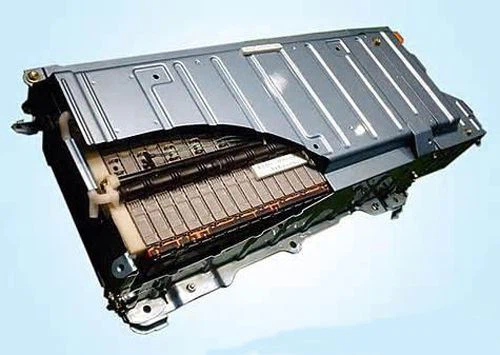
Air Cooling:
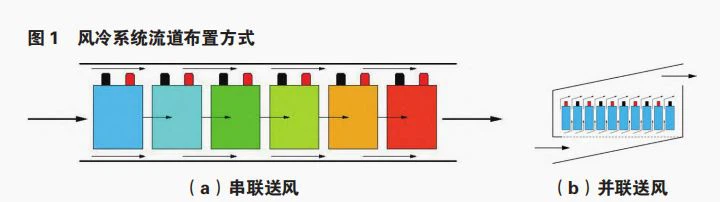
Air cooling is the first power battery cooling technology used. According to the flow power of the wind, there are two kinds of natural air cooling and forced air cooling, while according to the air duct of the air cooling system, there are two kinds of series cooling and parallel cooling. The air cooling system has the advantages of simpler structure and lower power consumption than liquid cooling and direct cooling systems. However, due to its channel layout, it has low space utilization and difficult to prevent water and dust, so it is not suitable for tightly arranged square and soft pack batteries. In addition, when the external air temperature is too high or too low, the heat management system is difficult to meet the needs, and the air supply cooling of the air conditioning system is required. Therefore, the cooling performance of the air cooling system is difficult to meet the use requirements, It is gradually replaced by liquid cooling and direct cooling systems.
Liquid Cooling:
Liquid cooling is the cooling mode with the best comprehensive performance. The main factors that have a great impact on the battery liquid cooling system are the physical and chemical properties of the coolant and the flow channel layout of the cooling pipeline. Liquid cooling can be divided into direct contact and indirect contact according to the structure.
The direct contact type is to immerse the battery in the coolant, which has the advantages of excellent heat exchange effect and good temperature uniformity, but the disadvantage is that it puts forward high requirements for the sealing and insulation performance inside and outside the battery pack. The indirect contact type is to lay a flow channel in the battery pack to make the coolant flow in the flow channel. The advantage is to reduce the requirements for sealing and insulation performance, Therefore, water, water / glycol and other liquids with low viscosity, high thermal conductivity and high specific heat capacity are used as coolant. In this way, the cooling intensity can be adjusted in a large range by adjusting the rotating speed of the circulating pump in a small range.
Air conditioning refrigeration Cooling:
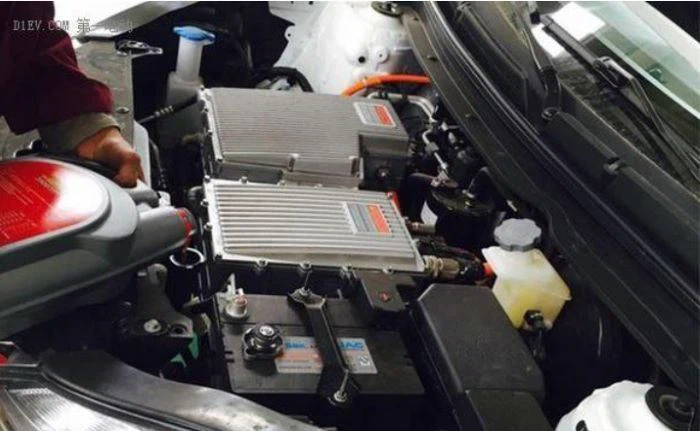
Direct cooling, also called as air-conditioning refrigeration, is to directly introduce the refrigerant of the air-conditioning system into the battery pack for cooling, which is equivalent to using the cooling plate in the battery pack as the evaporator of the air-conditioning system. The advantages of direct cooling system are high efficiency, rapid response and large cooling capacity. Its disadvantages are mainly that it is highly dependent on the automobile air-conditioning system. In summer, the load of the air-conditioning system is very high because the passenger compartment and battery system need high-power refrigeration; In winter, because the passenger compartment needs continuous heating and the battery pack needs to be preheated before cooling, it poses a great challenge to the vehicle's air conditioning system.

Phase change material cooling:
Phase change material refers to the material that can change the material state and provide latent heat under the condition of constant temperature, such as paraffin. The thermal management method of phase change material is to put the phase change material into the battery pack and use its high phase change latent heat to absorb the heat generated during battery discharge. Because the temperature of phase change material itself remains almost unchanged before the completion of phase change, Therefore, it can make the battery temperature more stable. The biggest advantage of phase change materials is that the structure and operation are the simplest. Only the batteries and phase change materials need to be reasonably arranged in the battery pack. There is no need for external system intervention in the whole process, and the temperature uniformity is excellent. In addition, phase change materials come from a wide range of sources and are cheap.
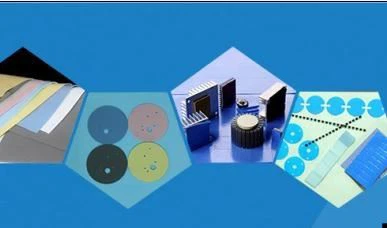
In the battery management of electric vehicles, the thermal management system is one of the core components of the battery management system. In normal operation, the battery of electric vehicles will generate a lot of heat due to the embedding and de embedding of lithium ions in the battery, the flow of current in the battery and battery pack, and various minor side reactions in the battery. If these heat is not discharged as soon as possible and accumulated in the battery pack, the temperature of the battery will rise, When the time is too long or the temperature exceeds the allowable upper limit, the service life of the battery will be seriously affected, and even the battery will be short circuited and exploded directly.


