Efficient liquid cooling technology for data centers
With the accelerated development of industries such as artificial intelligence, cloud computing, and big data, the demand, scale, and construction efforts of data centers have significantly increased. However, the energy consumption problem in data centers is becoming increasingly severe. Due to the fact that a significant portion of energy consumption in traditional data centers comes from cooling systems, it is necessary to utilize emerging liquid cooling technologies to construct green data centers.

The TDP (thermal design power) of the chip gradually increases, and some chips even reach 360W. This poses a serious challenge to the heat dissipation of server chips in traditional data centers that commonly use air-cooled cooling technology. Generally speaking, a heat flux density of around 5-10 W/cm ² has reached the limit of air-cooled cooling technology, and higher heat flux densities can easily lead to a large amount of heat being unable to be discharged from the chips in a timely manner. The main measure that data centers can take to solve this problem is liquid cooling technology. Generally speaking, the thermal performance of liquids is much better than that of air, with a thermal conductivity of about 15-25 times that of air and a specific heat capacity even 1000-3500 times that of air. Liquid cooled heat dissipation technology has demonstrated superior performance in heat transfer compared to air-cooled heat dissipation technology.

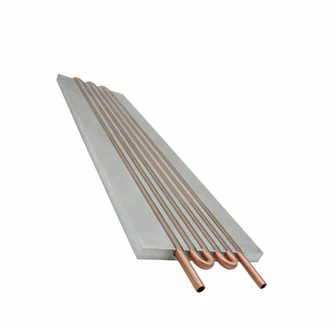
Compared to spray and immersion liquid cooling technologies, cold plate liquid cooling technology does not need to consider the issue of coolant conductivity. There are many types of coolant available, such as deionized water, nanofluids, etc., and their thermal properties are generally better than insulating coolant. In addition, optimizing the cold plate flow channel structure can increase the convective heat transfer area or enhance the convective heat transfer intensity, thereby effectively strengthening heat transfer. At present, the cold plate cooling technology in data centers is mainly used for chip liquid cooling, and the main research direction is channel topology optimization.

Spray cooling technology is applied in the data center, and the electronic devices in the server are often cooled in a contact way by using spray plates. Jet cooling technology and spray cooling technology are two technologies that can achieve higher heat flux and heat dissipation.

The basic working principle of immersion cooling is to completely immerse electronic devices in cooling liquid and achieve heat dissipation through circulation. Immersion cooling technology belongs to passive all liquid cooling technology. At present, the main research directions of immersion cooling technology are: optimization of immersion heat transfer structure (arrangement and heat dissipation surface structure), immersion high-efficiency coolant, and immersion boiling heat transfer.

At present, the research direction of liquid cooling technology mainly focuses on optimizing heat transfer structures, efficient cooling liquids, and two-phase boiling heat transfer. Optimizing heat transfer structures, such as array arrangement and micro/nano surface structures, to achieve excellent heat transfer performance by changing the flow characteristics of the working fluid, and how to improve the convenience of processing technology, has become one of the key issues for its effective promotion. The liquid cooling technology in data centers is still in its infancy, and there are still many key issues that need to be addressed urgently. Compared to data centers built on air cooling technology, data centers built on liquid cooling technology have undergone significant changes in their internal layout, architecture, equipment, and other requirements, which will inevitably reconstruct the relevant industry chain of data centers