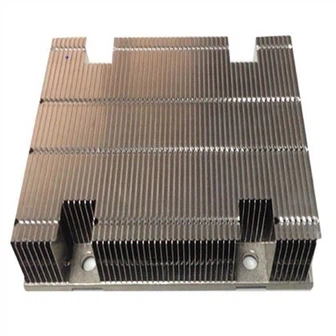
friction welding technology
Friction welding is a solid-state welding method to realize welding. Under the action of pressure, under the action of constant or increasing pressure and torque, the relative motion between the welding contact end faces generates friction heat and plastic deformation heat on the friction surface and its adjacent area, so that the temperature in the friction surface and its adjacent area rises to the temperature range close to but generally lower than the melting point, the deformation resistance of the material is reduced, the plasticity is improved, and the oxide film at the interface is broken. Under the action of upsetting pressure, With the plastic deformation and flow of materials, it is a solid-state welding method to realize welding through molecular diffusion and Recrystallization at the interface.

Friction welding usually consists of the following four steps:
1. Conversion of mechanical energy into thermal energy.
2. Plastic deformation of materials.
3. Forging pressure under thermoplastic.
4. Intermolecular diffusion recrystallization.
Advantages:
1. The biggest difference between friction welding and traditional fusion welding is that in the whole welding process, the temperature reached by the energy increase of the metal to be welded does not reach its melting point, that is, the metal is a forging like solid-state connection in the thermoplastic state.
2. Compared with traditional fusion welding, friction welding has the advantages of high welding joint quality - it can achieve the strength of weld and base material, high welding efficiency, stable quality and good consistency, and can realize the welding of different materials.
3. Friction welding can solve the technical bottleneck of high multiple and ultra wide profiles. Two or more profiles are spliced to realize ultra wide structure and high-density profiles, and the mold development cost is low, the cycle is short and the stability is high.