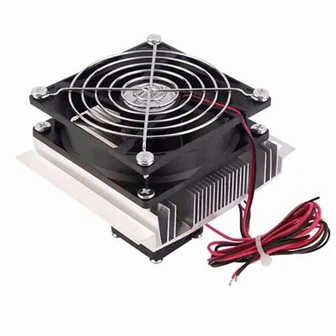
How to design and manufacture a custom heat sink?
In the intricate world of electronic devices, efficient thermal management is a paramount concern. Custom-designed heat sinks offer a tailored solution to address specific thermal challenges, ensuring optimal performance and longevity of electronic components. This article serves as a comprehensive guide on how to design and manufacture a custom heat sink, covering key considerations, the design process, and manufacturing techniques.
Key Considerations Before Designing a Custom Heat Sink:
Understanding Thermal Requirements: Before diving into the design process, it's crucial to have a clear understanding of the thermal requirements of the application. This includes the heat dissipation goals, maximum allowable temperatures, and any specific thermal constraints.
Material Selection: Choose the heat sink material carefully. Common materials include aluminum and copper, each with its own set of advantages. Consider factors such as thermal conductivity, weight, and cost when making this decision.
Form Factor and Space Constraints: Assess the available space for the heat sink within the device. The form factor should be optimized to fit the allotted space while ensuring efficient heat dissipation.
The Design Process:
Thermal Analysis and Modeling: Conduct thermal analysis using specialized software to simulate heat flow within the system. This step helps in determining the optimal size, shape, and configuration of the heat sink.
Geometry and Fin Design: Based on the thermal analysis, design the heat sink's geometry and fin arrangement. Fins increase the surface area, promoting better heat dissipation. The design should balance performance, manufacturability, and aesthetics.
Material Thickness and Heat Pipe Integration: Determine the appropriate thickness for the heat sink material, considering structural integrity and thermal conductivity. In some cases, integrating heat pipes into the design can enhance heat transfer efficiency.
Thermal Interface Material (TIM): Account for the use of TIM, such as thermal paste or pads, between the heat sink and the electronic component. The interface material ensures effective heat transfer and minimizes thermal resistance.


Manufacturing Techniques:
CNC Machining: Computer Numerical Control (CNC) machining is a precise method for manufacturing custom heat sinks. It allows for intricate designs and is suitable for low to medium production volumes.
Extrusion: Extrusion is a cost-effective method for producing heat sinks with a consistent cross-sectional profile. It is well-suited for designs with a simple or repeating pattern.
Die Casting: Die casting is suitable for high-volume production of heat sinks with complex shapes. It involves injecting molten metal into a mold, producing heat sinks with excellent dimensional accuracy.
Additive Manufacturing (3D Printing): Additive manufacturing offers design freedom and is suitable for prototyping or low-volume production. While not as common as other methods, 3D printing allows for intricate geometries.

Quality Control and Testing:
Thermal Testing: Perform thermal testing to validate the heat sink's performance. This involves measuring its thermal resistance, temperature distribution, and ability to meet the specified thermal requirements.
Structural Integrity: Ensure the heat sink has the necessary structural integrity to withstand mechanical stress and vibrations within the operating environment.

Designing and manufacturing a custom heat sink requires a careful balance of thermal, mechanical, and manufacturing considerations. By understanding the specific requirements of the application, selecting appropriate materials, and utilizing advanced manufacturing techniques, engineers can create bespoke heat sinks that optimize thermal performance and contribute to the overall efficiency and reliability of electronic systems.
As a leading radiator manufacturer, Sinda Thermal can offer wide range of heat sink types, such as aluminum extruded heat sink, skived fin heat sink, pin fin heat sink, zipper fin heatsink, liquid cooling cold plate, etc. Aslo we can provide great quality and outstanding customer service. Sinda Thermal consistently delivers custom heatsinks to meet the unique requirements of various industries.
Sinda Thermal was established in 2014 and has grown rapidly due to its commitment to excellence and innovation in the field of thermal management. The company has a great manufacturing facility equipped with advanced technology and machinery, this ensures that Sinda Thermal is able to produce various types of radiators and customize them to meet the different needs of customers.

FAQ
1. Q: Are you a trading company or manufacturer?
A: We are a leading heat sink manufacturer, our factory has been founded over 8 years, we are professional and experienced.
2. Q: Can you provide OEM/ODM service?
A: Yes, OEM/ODM are available.
3. Q: Do you have MOQ limit?
A: No, we don't set up MOQ, prototype samples are available.
4. Q: What's the lead time of the production?
A: For prototype samples, the lead time is 1-2 weeks, for mass production, the lead time is 4-6 weeks.
5. Q: Can I visit your factory?
A: Yes, Welcome to Sinda Thermal.