

How to dissipate heat from the power battery of electric vehicles
At present, most electric vehicles use lithium batteries as the main raw material for power batteries. Including ternary lithium, lithium iron phosphate, lithium manganese oxide and lithium cobalt oxide. The most commonly used are ternary lithium and lithium iron phosphate. Ternary lithium batteries have higher energy density, smaller size, and lighter weight, but their safety is often questioned. Although the energy density of lithium iron phosphate batteries is small, they are considered safer. The two battery materials have their own advantages and disadvantages, which is why different battery materials are used according to specific vehicle models and needs. From the perspective of the Lithium Battery Big Data Network, ternary lithium batteries have become the protagonist in the passenger car field, and lithium iron phosphate batteries are more commonly used in the passenger car field.
The overpower battery has a large working current and large heat generation, and at the same time the battery pack is in a relatively closed environment, which will cause the temperature of the battery to rise. This is because the electrolyte in the lithium battery, the electrolyte plays a role in charge conduction inside the lithium battery, a battery without an electrolyte is a battery that cannot be charged and discharged. At present, most lithium batteries are composed of flammable and volatile non-aqueous solutions. Compared with batteries composed of aqueous electrolytes, this composition system has a higher specific energy and voltage output, which meets the higher energy requirements of users. Because the non-aqueous electrolyte itself is flammable and volatile, it infiltrates the inside of the battery, which also forms the source of the battery's combustion. Therefore, the working temperature of the above two battery materials should not be higher than 60℃, but now the outdoor temperature is close to 40℃, and the battery itself produces a large amount of heat, which will cause the battery’s working environment temperature to rise, and if thermal runaway occurs, the situation will be very serious. It's dangerous. In order to avoid becoming a "barbecue", it is particularly important to dissipate heat from the battery.
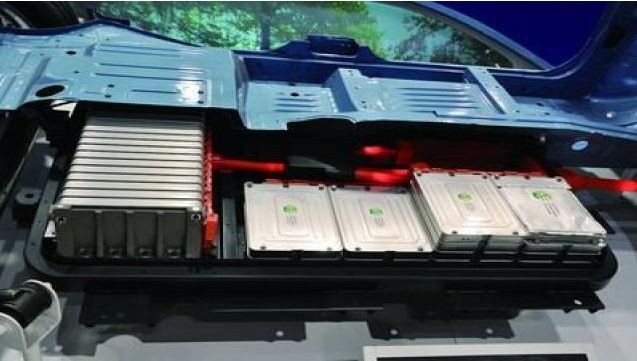
There are two types of battery pack heat dissipation: active and passive, and there is a big difference in efficiency between the two. The cost required by the passive system is relatively low, and the measures taken are relatively simple. The structure of the active system is relatively complex and requires more additional power, but its thermal management is more effective.
It is learned from the lithium battery big data network that different heat transfer media have different heat dissipation effects, and air cooling and liquid cooling have their own advantages and disadvantages.
The main advantages of using gas (air) as the heat transfer medium are: simple structure, light weight, effective ventilation when harmful gas is generated, and low cost; disadvantages: low heat transfer coefficient with the battery wall and slow cooling speed ,low efficiency. Currently there are many applications.
The main advantages of using liquid as the heat transfer medium are: high heat transfer coefficient with the battery wall, fast cooling speed; shortcomings: high tightness requirements, relatively large quality, complex repair and maintenance, water jacket, replacement Components such as heaters have relatively complicated structures.
In actual electric bus applications, due to the large capacity and volume of the battery pack, relatively low power density, air-cooled solutions are often used. For ordinary passenger car battery packs, the power density is much higher. Correspondingly, its requirements for heat dissipation will be higher, so water-cooling solutions are more common.
Different battery pack structure sensors will be determined according to the temperature measurement point and demand. The temperature sensor will be placed in the most representative location with the largest temperature change, such as the air inlet and outlet and the middle area of the battery pack. Especially the highest temperature and lowest temperature, as well as the area where the heat accumulation in the center of the battery pack is strong. This helps to control the temperature of the battery in a relatively safe environment, and avoid overheating and overcooling to cause danger to the battery.
In addition, the function of the battery diaphragm is mainly to separate the positive and negative stages of the battery in a small space to prevent short-circuit caused by contact between the two poles, but to ensure that the ions in the electrolyte can pass freely between the positive and negative electrodes. Therefore, the diaphragm has become the core material to ensure the safe and stable operation of lithium-ion batteries.
The electrolyte is to isolate the source of combustion, the diaphragm is to increase the heat-resistant temperature, and the sufficient heat dissipation is to reduce the battery temperature to avoid excessive heat build-up and cause thermal runaway of the battery. If the battery temperature rises sharply to 300°C, even if the diaphragm does not melt and shrink, the electrolyte itself, the electrolyte and the positive and negative electrodes will have a strong chemical reaction, releasing gas, forming internal high pressure and exploding, so use a suitable heat dissipation method is very important


