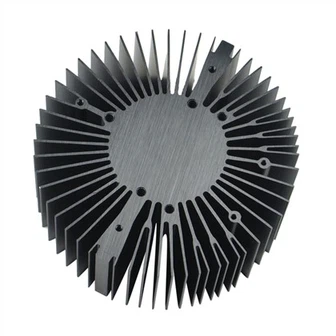
How to optimize the heatsink design by thermal simulation
Thermal Heatsink is a component that cools a device by dissipating heat. It can be used for both passive cooling and active cooling systems (e.g. combined with fans). When you optimize the heatsink, design you can turn to simulation. For the design of heatsink, the most important consideration is the cooling performance of heatsink under a given configuration, including flow properties and geometric layout.

A benchmark test of thermal performance is to place the heatsink in a rectangular channel equipped with thermal insulation wall, and then measure the temperature and pressure at the inlet and outlet of the channel. At the same time, it is also necessary to measure the power value required for the heat dissipation substrate to maintain a specific temperature. Finally, the benchmark results show the heat dissipated by the heatsink and the pressure drop of the channel.

When running the thermal optimization simulation, we only need to input some basic information of the heatsink and it's working conditions. The thermal simulation software will automatically calculate the detailed perfomance :
1. Width, depth and thickness of heatsink base
2. Number of fins
3. Fin height and thickness
4. Operating conditions:inlet velocity and temperature
5. Heat source temperature

By simply changing the input parameters, we can intuitively observe how the change of fin number affects the dissipated power and pressure loss. Even without a professional background in simulation, users can use the results to create an ideal radiator design.