How to reduce the heatsink thermal resistance
When talking about high-power electronic heatsink, we often hear a word - thermal resistance, which is the resistance encountered by the heat flow dissipated by high-power electronic devices in the transmission process (through a certain medium). It is a comprehensive parameter reflecting the ability to prevent heat transfer. How to effectively reduce the thermal resistance of the radiator is a key step affecting the heat dissipation performance, which can not be ignored in the thermal design.

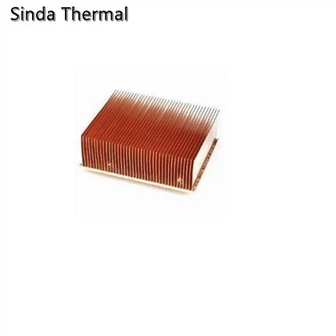
In actual case, increasing the width of the heatsink is also an effective way to reduce the thermal resistance when designing the electronic heatsink, and an effective way to reduce the thermal resistance when the weight and volume allow. The geometric parameters that affect the geometric parameters of the electronic radiator are: thickness, height, rib spacing, and the relationship between each parameter and junction temperature.

The thermal resistance coefficient of the heatink does not change significantly with the increase of fin thickness, the temperature changes slightly, first decreases and then increases, and the temperature change rate changes from negative to positive. In practical application, changing the thickness of the fin will only cause the change of the internal heat transfer performance and internal temperature field of the electronic radiator, but will not change the contact area between the fin and the external air, and will not improve the convective heat transfer coefficient. Therefore, the change fin thickness has little effect on the thermal resistance of the electronic heatsink.

The fin thickness of the heatsink is not a very important parameter in the actual design. When the width and fins number of the electronic heatsink remain unchanged, the excessively thick fins not only increase the weight, but also reduce the fin spacing. Therefore, it can be considered to increase its width when producing the heatsink.