How to solve the thermal issue of LED effectively
Why the LEDs generate heat?
The reason of LED generating heat is that the electric energy is not converted to light fully, some of it is converted to the heat, the efficiency of electric to light conversion is about 20%-30%, which means about 70% electric energy is turned into heat.
Specifically, the heat generation of LED is caused by two factors:
Firstly, the internal quantum is not effective enough, ]when electrons and holes are recombined, it can not be converted to photons 100%, which is usually referred to as "current leakage", which reduces the recombination rate of carriers in the PN region. The leakage current multiplied by the voltage is the power of this part, which is converted into heat energy, but this part is not the main heat source, because the internal photon efficiency is now close to 90%.
Secondly, the photons generated inside cannot all be emitted to the outside of the chip and finally converted into heat. this part is the main reason which rise up the temperature of , because the current so-called external quantum efficiency is only about 30%, and most of it is converted into heat.
As mentioned above, although the luminous efficiency of the incandescent lamp is very low, only about 151m/W, it converts almost all the electrical energy into light energy and radiates it out, because most of the radiant energy is infrared, so the light efficiency is very low. , but avoids the problem of heat dissipation.
Cooling solutions for LED bulbs:
Solving the thermal issues of LED mainly starts from two aspects. Before and after packaging, it can be understood as the ,cooling for LED chips and the cooling for LED bulbs. However, the cooling for the LED will also have different options depending on the power size and the place of use. There are mainly the following cooling methods:
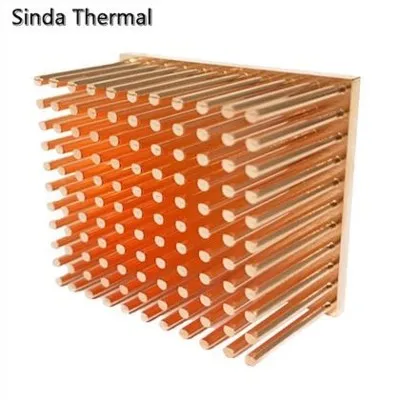
Aluminum fins heat sink: This is the most common thermal solution, using aluminum fins to increase the heat dissipation area.
Thermally conductive plastic shell: Fill the plastic shell with thermally conductive material during injection molding to increase the thermal conductivity and heat dissipation capacity of the plastic shell.
Air hydrodynamics cooling: Air hydrodynamics uses the shape of the lamp shell to create convective air, which is the lowest cost way to enhance heat dissipation.
The inside of the fan lamp shell uses a long-life and high-efficiency fan to enhance heat dissipation: the cost is low and the effect is good. However, it is more troublesome to replace the fan, and it is not suitable for outdoor use. This design is relatively rare.
Heat pipe thermal coolingtechnology: The heat pipe uses heat pipe technology to conduct heat from the LED chip to the shell aluminum fins. This is a common design in large lamps such as street lamps.
Surface radiation heat dissipation treatment The surface of the lamp shell is treated with radiation heat dissipation: simply apply radiation heat dissipation paint, which can take the heat away from the surface of the lamp shell by radiation.
Sinda Thermal is professional thermal expert, we are offering many thermal solutions and heat sinks to the global customers, we can design the optimized performance heat sinks and manufacture them in house, our factory owns over 100 employees and many precise facilities and equipment. Please contact us freely if you have any thermal requirements.