

Immersive liquid cooling - mainstream liquid cooling technology in data centers
Nowadays, the booming development of artificial intelligence has made the importance of data centers increasingly prominent. However, the development of data centers requires the support of a large number of IT equipment, and the continuous operation of these devices will inevitably generate a large amount of heat. Therefore, effective cooling methods are needed to ensure their normal operation. In the current technological environment, liquid cooling technology has become one of the important means of heat dissipation in data centers and is gradually maturing in the industry.
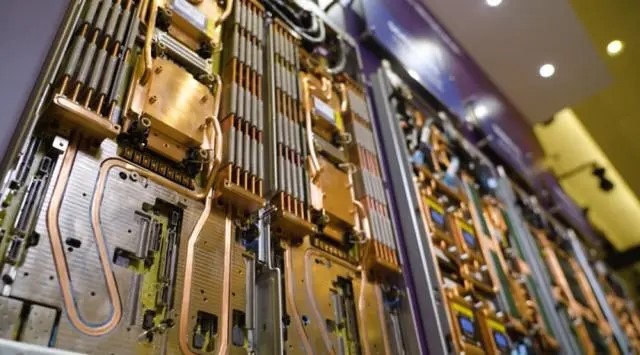
The infrastructure of data centers is mainly divided into two types: air cooling technology and liquid cooling technology. Air cooling technology, as the name suggests, is the use of air as a refrigerant for heat dissipation. It achieves the effect of cooling equipment by allowing air to come into contact with heating components and achieving heat dissipation through heat exchange. Liquid cooling technology, on the other hand, uses liquid as a refrigerant for heat dissipation. This technology effectively cools IT equipment by utilizing liquids to transfer the heat generated by internal components of data center IT equipment to the outside of the equipment.
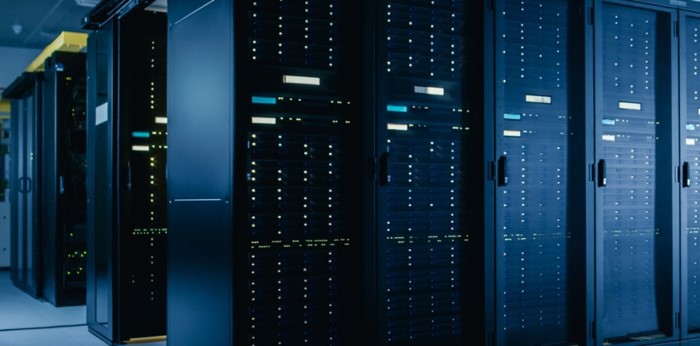
Compared to air-cooled technology, liquid cooling technology has the following advantages and disadvantages:
Advantages:
1. Higher cooling efficiency: Due to the higher thermal conductivity of liquids compared to air, liquid cooling systems can quickly remove heat from equipment, resulting in lower temperatures and more stable performance.
2. Lower energy consumption: Due to the much higher specific heat capacity of liquids compared to air, liquid cooling systems require less energy consumption during the cooling process, which can save energy costs for enterprises.
3. Suitable for high-density equipment: Liquid cooling systems are suitable for high-density equipment, such as high-power electronic devices, and can achieve efficient cooling effects in compact spaces.
4. Reduce noise pollution: Compared with air-cooled systems, liquid cooling systems produce less noise and are suitable for places that require quietness, such as hospitals, libraries, etc.
inferiority:
1. Higher initial cost: The construction and maintenance of liquid cooling systems require higher costs, including purchasing liquid cooling equipment, sealing the environment, etc., which are higher than those of air cooling systems.
2. More difficult to maintain: Once liquid leaks or blockages occur, it can cause greater harm to equipment and the environment, and the repair process is more complex and difficult.
3. Environmental requirements: Some liquids have characteristics such as corrosiveness and flammability, which have higher requirements for environments using liquid cooling systems.
4. Specialized technical support is required: For the use and maintenance of liquid cooling systems, specialized technical support personnel are needed to operate and maintain them, which is different from the use and maintenance of air-cooled systems.

A liquid cooling technology solution with immersion liquid cooling as the core. This solution is quite innovative, completely immersing the rack in liquid to achieve efficient heat dissipation. It is predicted that liquid cooling technology will be widely applied in future data center solutions to help reduce energy consumption in data centers.


