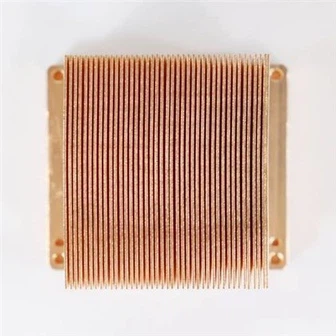
Lidar Thermal Solution
Lidar, namely optical detection and measurement, has the characteristics of high resolution, strong anti-active jamming ability, good low altitude detection performance, small volume and light weight. With the development of technology, the application fields of lidar are more extensive. It can be seen in many scenes such as unmanned driving, artificial intelligence, military, 3D printing, VR / AR and so on.
With the increasing demand of automatic driving assistance system in mass production models, the related sensing hardware has also developed rapidly. We usually need to observe the road conditions with our eyes when driving, and automatic assisted driving is to perceive the surrounding road conditions through sensing hardware. At present, the sensing hardware applied in automobile includes but is not limited to: camera, millimeter wave radar, ultrasonic radar, lidar and v2x related hardware.

The heat source of lidar products is mainly concentrated in the photosensitive chip. If there is no suitable heat dissipation channel, the heat accumulation will greatly shorten the service life of the products. The thermal interface material is selected as the heat transfer medium to transfer the heat of the chip to the heatsink. As it is applied to the optical lens, it is required that the selected materials shall not have small molecules such as siloxane volatilized during long-term use, so as not to pollute the lens.

In order to meet the special heat dissipation requirements of lidar, thermal PAD and thermal conductive adhesive with lower oil yield and better heat dissipation effect. At the same time, it has low stress and will not cause damage to the chip.