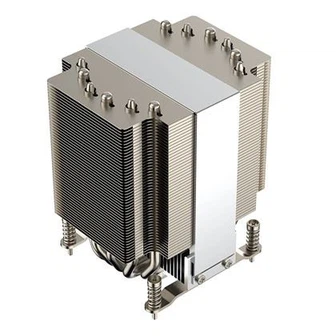
Passive Heat Sink vs Active Heat Sink: Which is Better for Cooling Your Electronics?
Heat sinks are very important to keep our electronics cool and functioning properly, and there are two main types we can choose from: passive and active heat sinks. Passive heatsinks work by convection and do not require an external power source, while active heatsinks require a power source in the form of a fan to help dissipate heat. In order to choose the right heat sink, we need to consider several factors such as the size of the device, the power used, and the expected ambient temperature.
Passive heat sinks are great for devices that don't generate a lot of heat and don't need much cooling, especially if we want it to be quiet. We can find them in everyday items like TVs, kitchen appliances and audio equipment.
What is a passive heat sinks?
A passive radiator is a radiator that does not have any external power source. It uses the process of natural convection to dissipate heat. Passive heat sinks are made of a large surface area with fins, which increase the surface area for heat transfer from electronic components. The heat is then dissipated into the surrounding air. Passive heat sinks are easy to install and require no maintenance, making them a popular choice for many electronic devices.
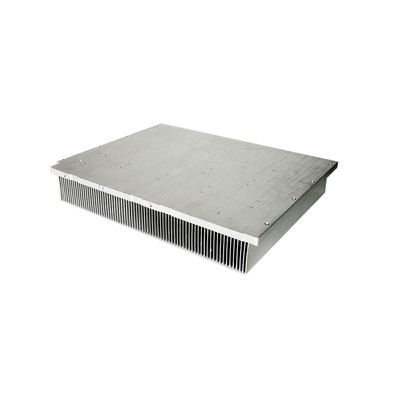
Active heat sinkss, on the other hand, are ideal for high-performance electronics such as gaming laptops and desktops. These devices require a lot of cooling to keep running properly, and active coolers can dissipate heat quickly, although they can be noisy and require maintenance.
What is an active heat sink?
Active heat sinks, on the other hand, rely on an external power source, such as a fan, to move air over the fins and dissipate heat away from the electronic components. Active heat sinks are usually more compact than passive heat sinks and dissipate heat more efficiently, away from electronic components. However, they require an external power source to operate, and the fans are often noisy and require maintenance.

When selecting a heat sink, factors such as ambient temperature, power consumption, and device size need to be considered comprehensively. Talking to a thermal management expert is an excellent way to find an effective cooling solution for our needs.
Selecting the proper type of heat sink depends on various factors such as the size of the electronic device, power consumption, and expected ambient temperature. Passive heat sinks are suitable for devices that generate minimal heat and do not require a high degree of cooling. They are also ideal for equipment requiring quiet operation and minimal maintenance. Active heat sinks, on the other hand, are suitable for devices that require high heat dissipation and high power consumption. They are ideal for devices that require an efficient cooling mechanism that can operate with a certain level of noise.
Ultimately, the choice of heat sink depends on the specific needs of your equipment. Before choosing a suitable heat sink, factors such as ambient temperature, device size, and power consumption should be considered comprehensively. If you're not sure, consult a thermal management expert to help you choose the most effective cooling solution for your electronics.