Research on heat dissipation performance of wind power converter IGBT
Wind power converters are prone to extreme high and low temperature phenomena, and the installation space is extremely limited. How to dissipate heat for high-frequency, high-current IGBT modules in a limited space has become the key to the heat dissipation design of wind power converters. At present, the heat dissipation methods applied to the IGBT modules of wind power converters mainly include forced air cooling and water cooling. In order to make the IGBT module work normally, it needs to be designed for heat dissipation to ensure that the operating temperature of the IGBT module is within the allowable maximum junction temperature.
Aiming at the heat dissipation requirements of IGBT modules using forced air cooling, a practical loss calculation method is introduced. The IGBT loss calculation results under different working conditions are substituted into the flotherm software, and the thermal simulation models of ordinary radiators and heat pipe radiators are used for the two The simulation and comparative analysis of different radiators were carried out. Afterwards, the heat dissipation performance of the two radiators of the converter product is calculated by the equivalent thermal resistance network of two parallel modules. Substituting the above value into formula (6), K/W is obtained. Based on the calculated thermal resistance of the radiator, select corresponding radiator.
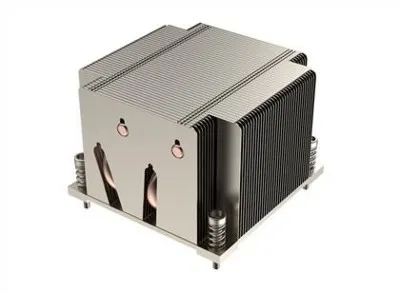
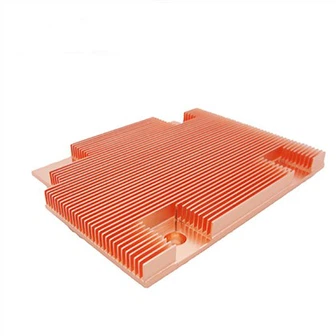
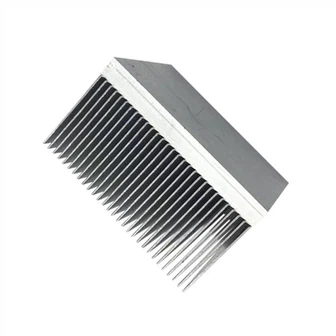
The form of the heat sinks generally includes ordinary radiator, water-cooled heatsink and heat pipe heat sink. The air duct of the converter machine side or grid side A, B, C three-phase IGBT modules conduct centralized heat dissipation. For forced-air heatsink designs, there are several ways to reduce the heatsink's own thermal resistance. Many scholars in China have studied the influence of parameters such as radiator fin height, thickness and density on the thermal resistance of radiators, and will not repeat them here. Another method that is commonly used in engineering to significantly improve the heat dissipation capacity of the radiator is to embed heat pipes in the radiator substrate, but the problem is that the cost increases. Here, both the machine side and the grid side of the converter adopt the SVPWM method. In the experiment, the internal integrated NTC is used to collect the temperature rise data of the module, and the junction temperature can be calculated by the following formula: From the experimental data of the radiator, it can be seen that when the current is small, the total power consumption is small, and the difference in heat dissipation performance between the two radiators is not large. At 450A, the temperature rise of the IGBT module varies by about 10 feet.

The simulation analysis was carried out under the condition that the wind speed at the air inlet of the module is 7m/s, and the current of the module is from 100A to 500A. Table 1 shows the comparison data of the junction temperature of the experimental chip of the heat pipe radiator and the junction temperature of the simulated chip. It can be seen that the experimental data is in good agreement with the simulation results, and the simulation software can accurately simulate the junction temperature of the chip.
b is the comparison of the simulation results of the chip junction temperature under variable wind speed conditions under the same module current and the same module loss. It can be seen that as the wind speed increases, the chip junction temperature decreases. Under high current conditions, the higher the wind speed, the greater the chip temperature drop big.
Simulation data analysis Current/A Experimental chip junction temperature/t Simulation chip junction temperature re error/(a) Module temperature rise Experimental experiment and simulation waveform 5 Conclusions A practical method for calculating IGBT module loss is introduced here for wind power converters method, and import the loss calculation results into the Flothem software. Through the comparison of simulation analysis and experimental test data, the difference in heat dissipation performance of the two radiators was compared and analyzed, and the correctness of the theoretical calculation and simulation model was verified. At the same time, the heat dissipation performance simulation curve of the radiator under the condition of variable air volume is given, which provides an important reference for the selection of the IGBT radiator of the wind power converter.