Research on thermal design and thermal analysis of Telecom equipment
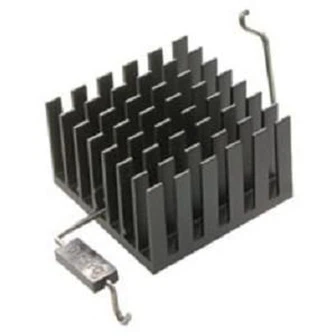
In order to meet the requirements of high forwarding rate and fast computing and processing capabilities, chips with high packaging density are widely used in core backbone network communication equipment. The chip has a high heat flow density and a large amount of heat. If the temperature is too high due to poor heat dissipation, it is easy to cause problems such as error codes, packet loss, crashes and even chip burnout. Therefore, studying the thermal design and thermal analysis of communication equipment is of great significance for improving the reliability of the equipment. Thermal simulation analysis based on CFD is an important method for discovering thermal risks in the product development stage, improving program design, and accelerating product development. First of all, this paper studies the thermal characteristics of the chip, PCB, heat pipe, and thermal interface layer and establishes its equivalent thermal analysis model for the difficult and key issues of thermal simulation modeling in the heat dissipation analysis of high-power chips. A method to determine the flow resistance and thermal resistance characteristic parameters of the radiator through numerical simulation is proposed, and a simplified model of the radiator's volume damping is established. By comparing the calculation results of the simplified model and the detailed model, the rationality of the simplified model is verified. Then, based on the Ansys Icepak heat flow analysis software platform, a thermal simulation analysis of a high-power chassis switch is carried out. Due to the complexity of the chassis, a simplified model of each daughter card is established in the system-level thermal analysis, and the operating point of the fan and the air volume of each slot are obtained through the system-level thermal analysis, and methods to improve the ventilation effect of the system are discussed. On the basis of the boundary conditions of the daughter card obtained from the system-level analysis, a detailed model of the single board was established for board-level thermal analysis, and the flow field, temperature field distribution of the single board and the junction temperature of each chip were determined, and the number of heat sink fins, The influence of fin thickness and chip layout on heat dissipation of single board. Secondly, the temperature test was performed on the prototype, and the simulation and test results were compared. The deviation between the simulation and the experiment was about 10%, which verified the simulation.