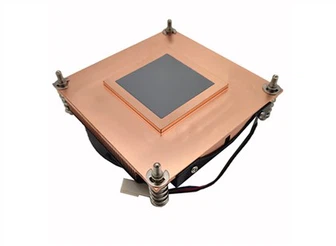
Solar cell thermal management system
The development and utilization of new technologies have accelerated the process of excessive exploitation of natural resources. The excessive utilization of natural resources has worsened environmental problems such as greenhouse effect and ozone layer depletion, not only affecting the living environment of future generations, but also causing a sharp decline in the available resources, seriously hindering the innovation and development of industrial technology. In recent years, solar cells are rapidly developing towards high heat flux density and high performance, The temperature rise of solar cells under high light intensity and high current leads to a decrease in their photoelectric performance and shortened service life. An efficient thermal management system is needed to ensure the safety and stability of the battery.
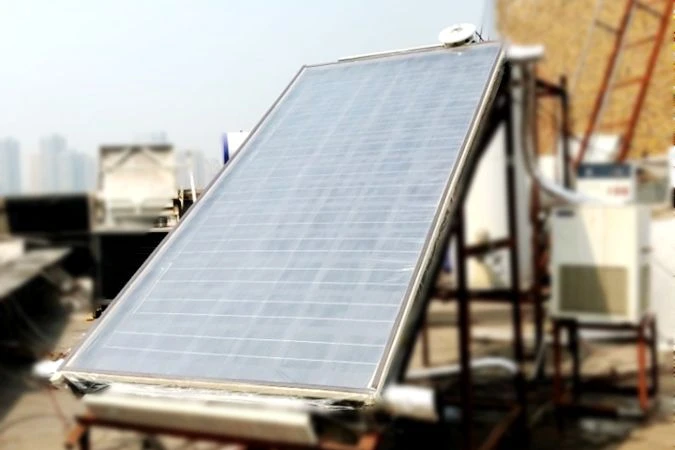
At present, the laboratory conversion efficiency of concentrated solar cells has reached 47.1%, while the popular monocrystalline silicon cells in the market have a conversion efficiency of only 26.7%. Factors such as module type, electrical losses, and working environment have always constrained the improvement of photovoltaic power generation system efficiency. Among them, the temperature effect is the key factor affecting the performance of photovoltaic cells. The output power and energy conversion efficiency of the system greatly decrease with the increase of the working temperature of the photovoltaic cells. Research statistics show that for every 1 ℃ increase in the working temperature of solar cells, the conversion efficiency decreases by 0.4%~0.5%. Although the temperature effect of different types of solar cells varies, it may still hinder the development of solar cell technology and materials to improve efficiency.

The research on solar cell cooling is a series of solutions developed by researchers to address the uneven light intensity and high heat flux density that lead to uneven battery temperature, local overheating, and increased average temperature as the concentration ratio increases. With the improvement of heat dissipation technology and demand, the thermal management technology of solar cells is divided into traditional cooling (air cooling, liquid cooling) and new cooling technologies such as microchannel cooling, jet impingement cooling, and phase change material cooling.
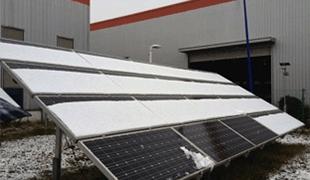
Air cooling technology reduces the working temperature of solar cells by allowing air to flow through the cooling module through natural or forced convection. Cuce et al. install aluminum fin heat sinks on the back of the solar cells, which can increase the output power of the cells by 13%. The temperature of the solar cells is reduced by 5.4% and 11% respectively under self heating convection and forced convection conditions, and the output power is increased by 8% and 16% respectively, Bayrak et al. obtained through outdoor measurements that fin cooling can control the battery within the allowable temperature range.

Liquid cooling refers to the timely transfer of heat generated by solar cells to the outside world through liquid working fluids. Zilli et al. used water-cooled nozzle systems at high irradiation levels, resulting in a relative increase in power and efficiency of polycrystalline silicon cells by 12.26% and 12.17%. The optimal cooling method is to simultaneously cool the front and rear surfaces of the cells, and the conversion efficiency and output power of solar cells can be improved to 40.572% and 20.083W, respectively. Compared to air cooling, liquid cooling has strong heat transfer ability, It has a significant effect on improving the performance of solar cells.

At present, heat pipe technology is involved in the cooling schemes of aerospace thermal control, computer and server chips, and high-power electronic devices. As a new type of cooling method, heat pipe technology is gradually being paid attention to in the field of solar cell cooling applications. According to different operating principles, heat pipes can be divided into three types: gravity heat pipes, loop heat pipes, and pulsating heat pipes. The cooling applications are complex and diverse, and the structure of heat pipes is also not consistent, Has the characteristics of heat transfer ability and strong temperature uniformity.

Solar cells are rapidly developing towards high heat flux density and performance, posing great challenges to their thermal management systems. By comparing and analyzing traditional cooling technologies (air cooling, liquid cooling) and new cooling technologies (microchannel cooling, jet impingement cooling, etc.), it can be found that new cooling technologies can effectively improve the thermoelectric efficiency of batteries by enhancing heat transfer, increasing heat dissipation area, and increasing working fluid flow rate. However, the equipment is complex, The cost is higher than traditional cooling technologies
The mutual coupling between cooling technologies such as air cooling, liquid cooling, microchannels, and heat pipes can further improve the heat dissipation efficiency of solar cells, and is also the development direction of advanced thermal management systems.