Talking about the heat creation and heat dissipation of LED
In recent years, LED technology has been hailed as the next generation of lighting technology. With the increase of LED power supplies, cooling issues have attracted more and more attention. Researchers have long observed that the light decline or lifetime of LEDs is directly related to its bonding temperature, so if the heat is not smooth, the temperature is high and the lifetime is short.
Unlike the past incandescent lamps and fluorescent lamps, the energy loss is great, but most of the energy is emitted directly through infrared rays, and the heat of the light source is very low. LED converts all energy (except energy consumed by visible light) into heat energy. Electronic products have gradually become the exception to high-density, high-density, and Led products. Solving the problem of Led heat dissipation has become a major issue for the improvement of Led performance and the development of the Led industry.
Causes of LED heating:
The reason why the LED heats up is that the added electricity is not converted into light energy, and part of it is converted into heat energy. The indicator light is only 100lm/W, and the electro-optical conversion efficiency is about 20% to 30%. In other words, about 70% of electricity is converted into heat.
In particular, the occurrence of LED connector temperature is caused by two factors:
1. Both internally are not efficient. In other words, when electrons are combined with holes, photons cannot be generated 100%, usually due to "current leakage" which reduces the carrier recombination rate in the PN region. The leakage current multiplied by the voltage is the power of this part. In other words, it is converted to heat, but this part does not occupy the main component, because the efficiency of the internal photons is already close to 90%.
2. The photons generated internally cannot be shot outside the chip, and part of the main reason for the final conversion to heat is that the external quantum efficiency is only about 30%, most of which are converted to heat.
As mentioned above, the light efficiency of incandescent lamps is very low, but only about 15lm/W, but almost all electricity is converted into light energy and emitted. Most of the radiation is infrared, so the efficiency of light is very low, but the heat dissipation problem is eliminated.
LED cooling solution:
The heat dissipation of the Led mainly starts from the heat dissipation of the Led chip before and after the packaging and the heat dissipation of the Led lamp. The heat dissipation of the LED chip is mainly related to the substrate and circuit selection process. Because any LED can be used to manufacture a lamp, the heat generated by the LED chip is finally dispersed into the air through the lamp housing. If the heat is not well dissipated, the heat capacity of the LED chip will be very small. Therefore, if some heat is accumulated, the connection temperature of the chip will increase rapidly, and if it is operated at high temperature for a long time, its life will be shortened rapidly. But this heat must go through multiple paths to guide the chip to actually reach the outside air. In particular, the LED chip generates heat from the metal thermal block, generates heat from the solder to the PCB on the aluminum substrate, and reaches the aluminum heat sink through the thermally conductive adhesive. Therefore, LED lighting includes both thermal diffusion and thermal diffusion. The cooling method of the LED housing depends on the size of the power supply and the location of use. The main cooling methods are as follows:
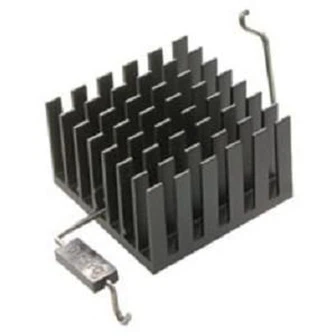
Aluminum hot selling: The most commonly used thermal method, using aluminum hot selling as part of the shell to increase the cooling area.
Thermally conductive plastic shell: The plastic shell is filled with thermally conductive material during injection molding to improve the thermal conductivity and heat dissipation capacity of the plastic shell.
Air fluid mechanics: Using barnacle shapes to make convective air is the cheapest way to dissipate heat.
Fan: Inside the lamp housing is a high-efficiency fan with a long service life, which can enhance cooling, with low cost and good effect. However, changing the fan is very troublesome and is not suitable for outdoor use. This design is relatively rare.
Heat exchanger: heat exchanger technology is used to induce the heat in the LED chip to the hot pins of the chassis. Large-scale lighting such as street lamps is a typical design.
Surface radiation heat dissipation treatment: The surface of the lamp housing is radiated heat dissipation treatment, and the sishengweihua radiation heat dissipation coating is applied, which can emit heat from the surface of the lamp housing.
ZS-411 radiant heat cooling coating has high thermal conductivity and large heat surface area, and has a large wavelength range (1-20m) of high emissivity, which can significantly improve the thermal conductivity including conduction, convection and radiant heat. Comprehensive performance within.
The coating adopts a high-performance thermal solution, with visible light and near-infrared reflectivity, thermal infrared emissivity and high stability special performance, has good physical and chemical properties, and due to the aggregation of inorganic colloidal particles below 100 nanometers And produce good workability and compounding of binding force. Adding carbon nanotubes and other materials with high thermal conductivity and radioactivity to the coating solution can form nanomaterials with macro, micro, and rough forms on the coating surface, thereby greatly increasing the heat dissipation device and the external contact area, and greatly improving the heat dissipation effect. By adding a variety of electron-transferred spinels as composite infrared radiators, the impurity energy level is increased, and the infrared radiation coefficient is improved, thereby maintaining thermal stability and heat resistance.
The overall luminous efficiency of the LED is low, so the joint temperature is higher and the life span is shortened. In order to prolong the life and reduce the temperature of the joint, attention must be paid to heat dissipation.
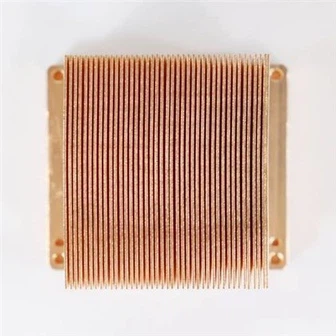
Thermal solutions for every industry is very important as the power is gradually higher and higher, Sinda Thermal can provide varieties heatsinks and coolers which inlcuding aluminum extruded heatsink, high performance heatsink, copper heatsink, skived fin heatsink, and heat pipe heatsink. please contact us if you have any questions about thermal solution.
website: www.sindathermal.com
contact:castio_ou@sindathermal.com
Wechat: +8618813908426