What are the advantages and disadvantages of vapor chamber compared to traditional cooling systems
With the continuous improvement of electronic device performance and power consumption, heat dissipation has become a key issue. In recent years, we have heard more and more about a new term for thermal components : Vapor Chamber, which is a heat dissipation technology that transfers heat through liquid vapor phase transition. Vapor Chambers are usually made of high thermal conductivity materials such as copper, with a small amount of working liquid enclosed inside, such as deionized water or acetone.

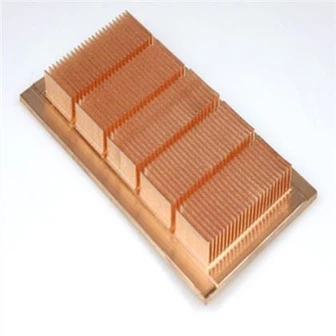
The working principle of a heat spreader is that when an electronic device is operating, the heat generated by a heat source (such as a CPU or GPU) is absorbed by the heat spreader. The liquid inside the plate evaporates into steam after being heated. The steam rapidly expands due to the absorption of heat and moves from the high-pressure zone to the low-pressure zone, quickly diffusing to the cooling zone of the vapor chamber. Here, the steam quickly condenses into liquid when it contacts the lower temperature inner wall in the low-pressure zone, condenses and releases heat to form a liquid. Finally, the liquid returns to the heat source through capillary action, and this cycle repeats. This cyclic process can efficiently transfer heat from the source, thereby preventing equipment from overheating. Generally speaking, in order to better dissipate heat, high-end boards nowadays often add traditional cooling fins and connect cooling fans on top of the vapor chamber, thereby further improving heat dissipation efficiency.

Compared with traditional heat dissipation technologies such as heat pipes, air cooling, and liquid cooling, heat pipes have obvious advantages: the principle of VC is similar to that of heat pipes, which also use the evaporation and condensation of liquids for heat transfer. Heat pipes can be flexibly bent and arranged, suitable for conducting heat from a heat source to a cooling area over long distances. However, the heat conduction direction of heat pipes is strong, and the heat distribution is uneven. Generally, large volume fins are needed for heat dissipation and equalization.

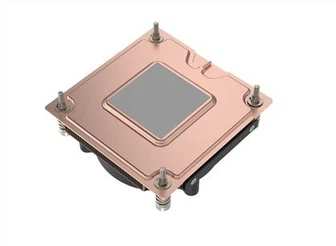
The vapor chamber can efficiently and evenly distribute heat, avoid local overheating, and improve overall thermal efficiency. Its compact design makes the heat spreader particularly suitable for devices with limited space, such as laptops, lightweight graphics cards required for small chassis, smartphones, etc. Thevapor chamber has no mechanical moving parts, reducing the risk of failure and noise issues.

Compared with heat pipes, the heat conduction capacity of the vapor chamber is stronger and the heat distribution is more uniform. In some high-performance graphics cards and processors, the application of heat dissipation boards can significantly improve the device's heat dissipation and stability. Compared with air cooling, thevapor chamber does not rely on mechanical components such as fans, reducing noise and the risk of malfunctions. Compared with liquid cooling systems, although the performance of the vapor chamber is slightly inferior, its installation and maintenance are simpler and the cost is relatively lower.

In the future, with the increase in power density of electronic devices and continuous technological progress, the application prospects of vapor chamber will be even broader. It is necessary to consider whether to adopt vapor chamber technology and the quality of vapor chamber as important reference conditions for purchasing card and laptop products.