What is the difference between server CPU and household CPU
The CPU is the "brain" of a computer or electric device, responsible for executing various calculations and instructions. It is composed of billions of transistors that turn on and off at extremely fast speeds, performing various computational tasks. The speed and efficiency of the CPU directly determine the processing power and response speed of the computer or electric device. There are many types of CPUs in our daily life and work , mainly contains of server cpu and household cpu, so what's the difference of these cpus?

The server CPU is designed for data centers and enterprise environments and must adapt to continuous high-intensity workloads, while home CPUs are mainly used for personal computers to meet daily needs such as browsing web pages, office software, and playing video games.
The server needs to run continuously, handle a large number of concurrent requests, attach importance to stability and data security, so they often adopt multi-core design, support a large amount of memory and complex error correction mechanisms; Home CPUs place greater emphasis on user interaction experience, including fast response time and good graphics performance, and are more sensitive to electricity consumption and cost.

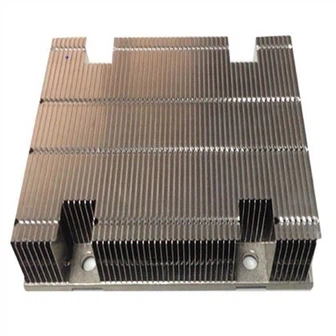
When designing server CPUs, power management is highly valued because there are a large number of servers listed within the data center, and any temperature increase will lead to an increase in cooling costs. The server CPU needs to be equipped with a more efficient cooling system to maintain an appropriate operating temperature and prevent performance degradation or system failure caused by overheating. In terms of household CPUs, because most users do not run at full load 24 hours a day, the design standards for heat dissipation and power consumption are slightly lower than those of server CPUs. Home CPUs are also adopting advanced process technology to reduce power consumption and increase core frequency, while using relatively simple cooling solutions.

Due to the high standard requirements for performance, stability, and reliability of server CPUs, manufacturing costs are relatively high. In large-scale computing tasks, enterprise level applications, and critical task processing, higher investments can bring considerable long-term returns.
On the contrary, household CPUs focus more on cost-effectiveness, taking into account the sensitivity of individual users to price. Although modern household CPUs have high performance standards, they place more emphasis on cost control in manufacturing. In addition, due to the large market size of household CPUs, competition among manufacturers also helps to reduce costs.

Different markets and application areas also lead to differences between server CPUs and household CPUs. The server CPU is aimed at data centers, cloud computing services, large enterprises, research institutions, etc., which can benefit from stable high performance and high reliability. And household CPUs mainly serve individual users, including daily office, entertainment, and mild content creation. Household CPUs need to provide performance standards that meet basic usage needs for a wide range of applications.