Why does the thermal managemnt of SSD is getting more and more important
A few years ago, when SSD was still in the era of SATA, you may not have noticed that SSD would overheat. Because the performance of SATA SSD is not high, coupled with the auxiliary heat dissipation of hard disk shell, the installation position of 2.5-inch hard disk is much better than that of m.2 SSD. The heat can be directly transferred to the hard disk rack through the shell, and the heat dissipation effect is much better than that of m.2 SSD, so the temperature is not high.
Compared with the 2.5-inch SATA SSD, the m.2 SSD is smaller in size, which means that the chips on the PCB will be more densely stacked together. Moreover, the m.2 SSD can go through the PCI-E X4 channel with high performance and requires higher performance master control and flash memory, which represents greater heat generation. In addition, the m.2 SSD is basically attached to the motherboard, and the heat dissipation environment is worse, which further exacerbates this problem.

Too high temperature may cause damage to SSD Firmware, which cannot be repaired by itself, and even damage to SSD chip components.
Facing the problem of overheating, the solution given by SSD is actually the same as that given by CPU and graphics card. The overheating protection mechanism. There are temperature sensors in the main control, flash memory and DRAM cache on SSD. Some may put the sensors in PCB, and these temperature data will be transmitted to the main control. Some data can be fed back to the system through smart. Whether the temperature is too high is judged by SSD main control, SSD manufacturers can set the critical temperature in the firmware. If it exceeds this line, it will reduce the frequency of master control and flash memory, so as to reduce their own heating capacity and reduce the temperature.

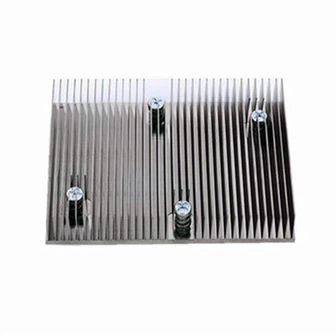
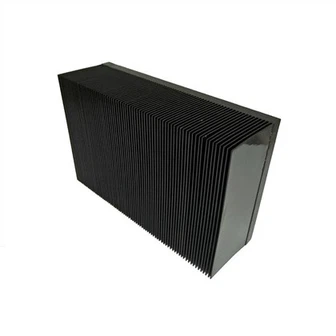
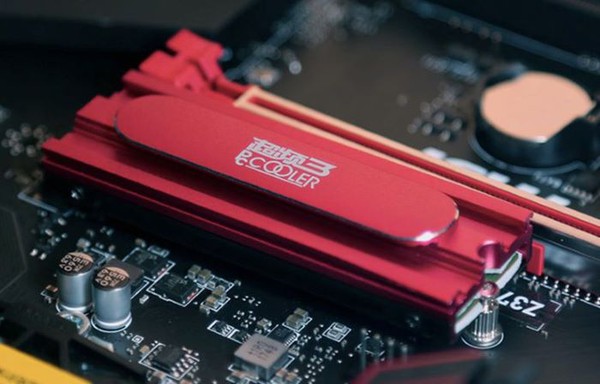
At present, mainboards above the mainstream level will basically be equipped with m.2 SSD heat sinks, at least one, and high-end mainboards will even be equipped with two or three. Some well-designed mainboards will even prepare heat sinks on both sides for m.2 SSD.
In addition to installing a heat sink for the SSD, some high-performance notebooks, when the internal space is limited, use the method of installing heat conductive stickers to transfer the heat of the SSD directly to the shell of the notebook.

The purpose of SSD overheating protection mechanism is to protect the security of SSD and user data. These things are far more important than speed. Of course, after adding a heatsink or thermal PAD , the temperature of SSD will be much lower, which makes it more difficult to trigger this temperature protection. A lower temperature is also beneficial to prolong the life of SSD.