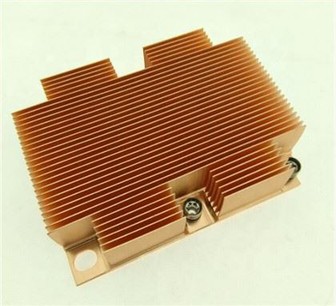
Brief Introduction of radiator structure
The thermal performance of the radiator is not only affected by the different materials used by its heat sink, but also by many factors such as the size of its heat dissipation area, the bottom gloss, the style of heat sink, etc, let's go through the brief Introduction of radiator structure listed below:
1. Size of heat dissipation area:
The most common heat dissipation method of the radiator is to increase the heat dissipation area, but the size and weight of the CPU radiator are limited to a certain extent. Then, how can a certain volume of radiator have a larger heat dissipation area? The design of heat sink shape plays a key role for the thermal performance .

Heat sink on the left side is most common design , while ALPHA PAL8045T module is on the right side. Undoubtedly,the heat dissipation area of the radiator in the right figure is much larger than that in the left figure, so that its thermal conductive performance is much better.,
2. Flatness of the heatsink base:
The bottom of the heat sink, which is the plane in direct contact with the CPU, is the first pass to absorb the heat from the CPU. Generally speaking, the flatness of the radiator base should be quite high to form a mirror, so that it can be in close contact with the CPU and minimize the gap in the middle. Although the gap can be filled with thermal conductive silicone grease, However, the thermal conductivity of grease is ower than that of metal direct contact.

The heatsink base flatness on the right is much lower than the one on the left side, as you can image, due to the different tightness between the bottom of the radiator and the CPU contact surface, the two radiators absorb CPU heat at different speeds, which directly leads to different heat dissipation performance.
3. Style of heat sink design:
There are many styles of heat sink design, the most common one is concave convex, but the biggest disadvantage of concave convex heat sink is that when the wind accelerated by the fan blows down vertically, there is basically no resistance to flow along the groove of the heat sink, directly resulting in insufficient wind pressure between the air and the heat sink. In addition, because the heat sink is basically square, according to the heat distribution and rising curve, it is easy to cause the temperature in the center of the heat sink to be higher than the surrounding temperature.

The picture on the left shows the popular copper embedded aluminum turbine design radiator at this stage. It uses the turbine shaped heat sink with rotation angle to forcibly change the flow position of the wind blown down by the fan,so a certain "wind cutting" effect is generated to increase the wind pressure on each heat sink, then air can better contact the heat sink and take away the heat.
The fan-shaped heat sink in the right figure is completely customized according to the heat distribution and rising curve, so that the temperature on each blade is basically the same, so as not to cause the situation of high temperature in the middle and low temperature around the ordinary square radiator.
Sinda Thermal was Founded in 2014, and located in Dongguan City, China, we are providing varieties of heatsinks and precious metal parts. Our plant possesses advanced high precious CNC machines and stamping machines, also we have kinds of testing and experiment instruments and professional engineering team, we can manufacture and provide high quality products which posses high precious and performance and exceed the imported products. We provide professional ODM/OEM service for all kinds of thermal related products.