Introduction to various heat sinks
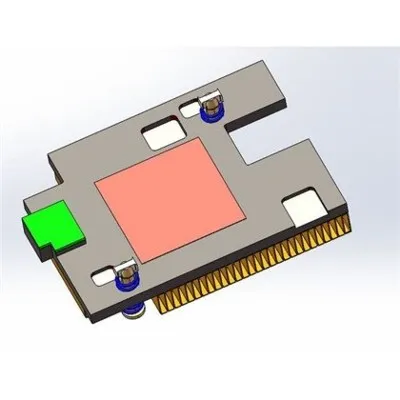
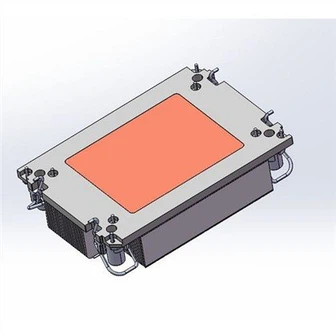
Heat sink is a device for easily heating electronic components in electrical appliances. It is mostly made of aluminum alloy, brass or bronze in plate, sheet, multi sheet, etc. for example, a considerable heat sink should be used for CPU in computer, and a heat sink should be used for power tube, line tube and power amplifier tube in TV. Generally, during the use of the heat sink, a layer of thermal conductive silicone grease shall be coated on the contact surface between the electronic components and the heat sink, so that the heat emitted by the components can be more effectively transmitted to the heat sink, and then distributed to the surrounding air through the heat sink.
Radiators can be divided into the following main types:
Extrusion heat sink:
This is an excellent thermal product material widely used in modern heat dissipation. Most of the industry uses 6063 T5 high-quality aluminum, with a purity of more than 98%. It has strong heat conduction capacity, low density and low price, so it has been favored by major manufacturers.


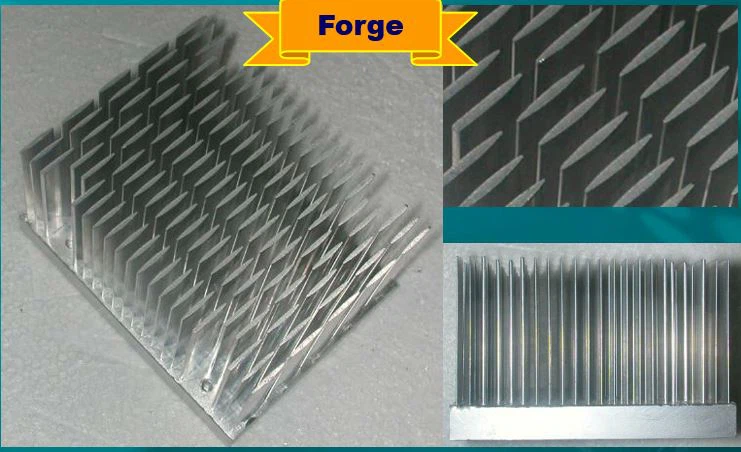
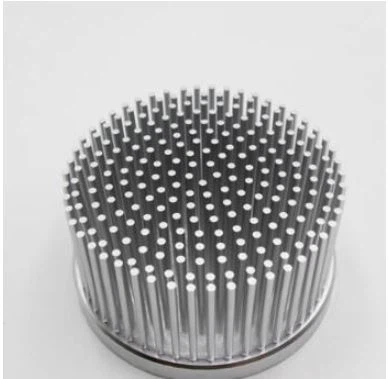
Forging heat sink:
Forging heat sink is to press metal materials into the die by means of very high pressure punch to form the fins. The possible problem in the process is that the materials will hinder in the die, resulting in uneven height. Hot forging is relatively easy, while cold forging can produce dense and strong fins. The advantages of forging include high strength, small surface roughness and material uniformity. The forged heat sink has a high aspect ratio.
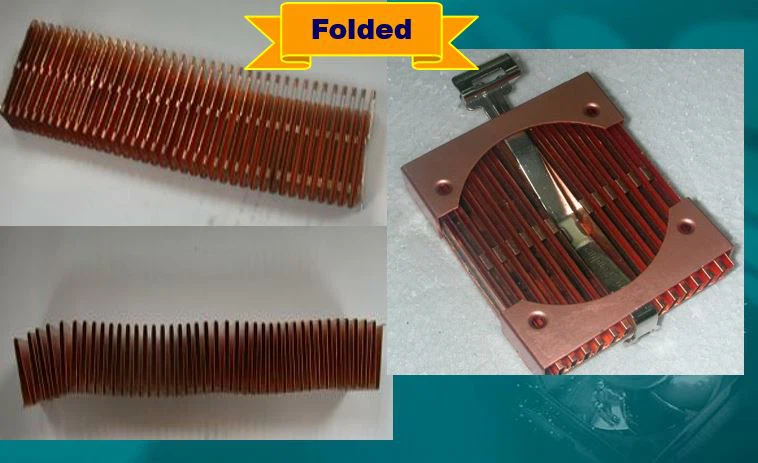
Folded fin heatsink:
A folded fin heat sink assembly and a method of fabricating a folded fin heat sink assembly for use as a cooling solution in micro-electronics and/or telecommunication applications. The heat sink assembly is formed by placing a sheet or paste of Sn—Zn solder upon a copper base plate, placing one or more aluminum folded fin assemblies on the solder sheet or paste, heating the base plate, the folded fin assembly and the solder to a temperature exceeding the liquidus temperature of the solder and allowing the solder to flow, and cooling the solder to form a soldered joint between the base plate and the folded fin assembly.

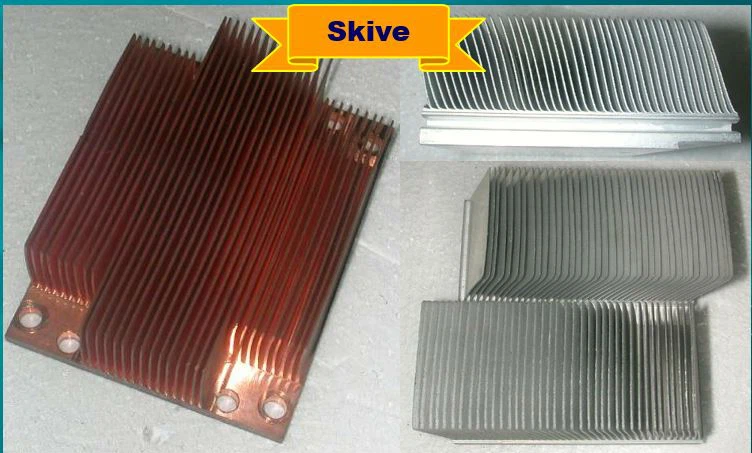
Skived Fin Heatsink:
A heat dissipation device is made by skived-fin technology and has a thermal conductive portion and a plurality of fins. The fins are integrally formed with the thermal conductive portion. Each of the fins has a plurality of through holes, a top portion, and a bottom portion. The bottom portion of each fin connects with the thermal conductive portion with a curve. The thermal conductive portion, which is disposed on the bottom of the heat dissipation device, is integrally formed with the fins in one metal board.

Stacked Fin Heatsink:
A heat sink and method of making the same. The heat sink includes a plurality of substantially planar fins, each of substantially uniform thickness, which are stacked together in alternating relation to one another. Each fin includes a base portion, a top portion, a fin side and a base side, with the base side of each fin being joined to the base side of adjacent fins to form a substantially planar surface.stacking the fins together in alternating relation to one another, and joining the stacked fins together to form the heat sink.


Crimping Heatsink:
crimping heatsink consists of three main parts: the groove, the base of the fin, and the adhesive that "bonds" the fin to the base.Therefore, it is called crimping heatsink.


Machining heatsink:
CNC machining heatsink is the the fastest and simplest production mode for thermal hestsink production. Customization is possible with different interface materials, finishes, and expanded heat sink size for smaller Rca.


Die Casting Heatsink:
Die casting heatsink is completed on a special die casting tooling, the whole product is formed at one time; Light weight, small volume, module combination. Optional length, convenient installation; Conduction convection, large heat dissipation,it is still one of the most advanced metal forming process at pressent.


There are many kinds of radiators on the market. How to choose the heat dissipation products suitable for your products is very important. If lack of consideration of other factors, and choose the unsuitable radiator, which will cause the opposite effect. We provide customers with professional, efficient and fast customized services. Sinda Thermal engineering team will be always happy to help if any customer need thermal solution product suggestion.