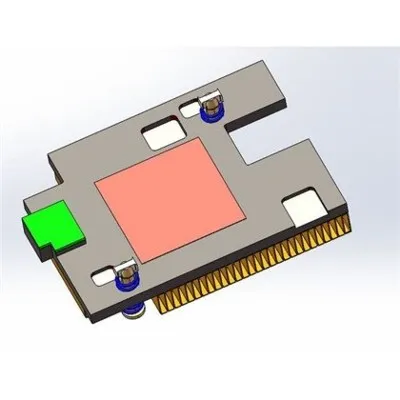
Composite process of copper-aluminum composite radiator
The composite process of copper tube and aluminum sheet has always been the focus of controversy. As early as 1997, Zhengzhou Machinery Research Institute established a special research team for copper-aluminum composite technology. Relying on the strong support of basic research in the machinery industry, it began to produce and develop copper-aluminum welding materials. In 2001, the relevant welding technology of copper-aluminum composite radiator was set as the development direction, and efforts were devoted to researching and solving the problems in the production of new radiators. Through more than 10 years of continuous development and improvement, we have developed aluminum welding wires for aluminum internal anti-corrosion, copper-aluminum composite and other radiator industries.
The connection between the copper-aluminum composite radiator header and the water channel in the production process requires a higher level of welding. However, due to poor welding technology and poor quality of some welding rods, it is easy to cause water leakage in defective products. If the flux-cored aluminum welding wire is used for brazing, the deficiency caused by the manufacturing level can be avoided. In brazing, copper does not melt as the base material, and the amount of deformation is relatively small. The brazing material enters the burrs of the base material and dissolves the solid surface of the base material to form an alloy. Brazing is the most obvious effect in welding. Brazing is divided into tin brazing and copper-phosphorus brazing. The temperature of tin brazing is below 300 degrees Celsius. The copper tube has high strength and does not soften. Flux must be added during welding to ensure Clean tin and copper dissolve; the content of p in copper-phosphorus brazing is 2%-5%, the melting point is below 800 degrees Celsius, the fluidity is relatively good, no need to add flux, and a small amount of silver is added to flow the seam movement effect More obviously, due to the presence of P, the impact resistance of the weld joint is low, and the addition of silver accounts for 25%, which improves the effect.