

Future development trend of server liquid cooling
Liquid cooling data center refers to a data center that applies liquid cooling technology and liquid cooled servers. Compared with traditional air-cooled servers, the heat export mode of liquid cooled servers is different. Liquid cooling refers to the technology that uses liquid to replace air as refrigerant to exchange heat for heating parts and take away heat.
Liquid cooling server refers to a server that injects liquid into the server and takes away heat from the server through cold and heat exchange. Generally speaking, the industry divides liquid cooling into direct cooling and indirect cooling.
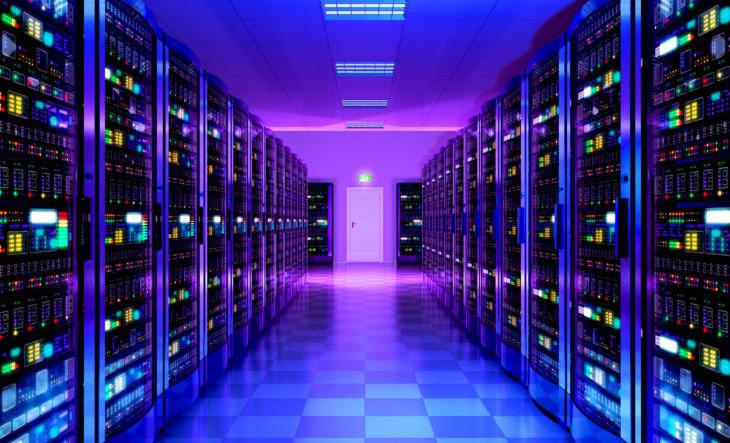
Liquid has a better heat conduction effect, 25 times that of air. The temperature transmission effect is faster and better, and it can achieve efficient cooling of IT equipment.
At the same time, due to the large specific heat capacity of the liquid, its own temperature will not change significantly after absorbing a lot of heat, so the CPU temperature can be determined. Even if the server encounters sudden operation, the surge in operating power will not cause a significant increase in the internal temperature of the CPU, which will ensure that the CPU will not overheat when it works over frequency within a certain range.
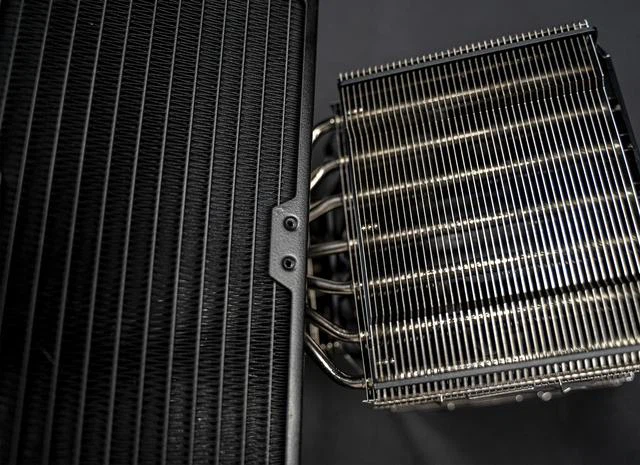
In addition, compared with the traditional air-cooled data center, the liquid cooling data center has removed the air conditioning system and the corresponding air-cooled infrastructure, and added the circulating pump, which can save the construction cost. Compared with the air cooling system, the liquid cooling data center can save about 30% of energy, effectively reduce the energy consumption ratio, and reduce the PUE (energy efficiency index of the data center) to 1.05, meeting the requirements of the green data center. Finally, under the same heat dissipation conditions, the pump and coolant system used in the liquid cooling system have less noise than the traditional air-conditioning system, which can achieve the effect of "silent room".

The higher the altitude is, the lower the atmospheric pressure or air density is, which will reduce the cooling effect of air medium and the heat dissipation capacity of air. For air-cooled data centers, the cooling capacity decreases and the temperature rise increases. Therefore, in order to ensure the cooling efficiency of the data center, the temperature of the air conditioning system needs to be lowered, which will cause more energy loss. Compared with air, the specific heat capacity of liquid is not affected by altitude and air pressure. Therefore, the heat dissipation efficiency of liquid cooling data center in high altitude areas is no different from that in low altitude areas. It can still maintain a high heat dissipation efficiency and ensure the operation efficiency and performance of the data center in high altitude areas.

The submerged liquid cooling data center completely reconstructs the computing, storage and network equipment based on the liquid cooling environment. It submerges IT equipment in an insulating and non corrosive coolant. After being absorbed by the coolant, the heat is directly transmitted to the outside world through the cooling system, breaking the air cooling bottle neck and achieving PUE approaching 1.0. At the same time, the sealed box ensures that IT equipment is not affected by moisture, harmful gases and vibration, and improves the reliability of equipment by more than 50%.

At present, the main reasons why the liquid cooling server has not been popularized on a large scale are that the technical industry chain of the liquid cooling server is not complete, the equipment procurement cost is high, the procurement channels are few, the compatibility of electronic components is low, and the cost of special coolant for the liquid cooling server is high.
However, in general, as the scale and density of IT cloud construction continue to rise, and the liquid cooling industry ecosystem gradually matures, higher requirements are put forward for server computing performance, latency, throughput, refrigeration, customization, distributed deployment, etc.
In the future, emerging server technologies such as GPU server, customized whole cabinet server and liquid cooling server will rapidly iterate, and will also bring new ideas and choices for the development and evolution of liquid cooling connectors and related solutions.


