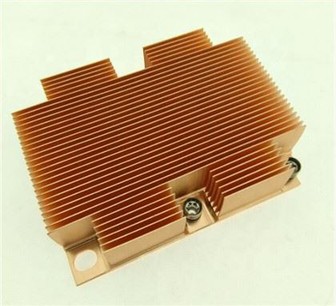
On the importance of heat dissipation design! Composite alloy cold plate shows its advantages in notebook cooling
When the notebook eliminates the fan (including fins), it can get the following benefits:
When matched with SSD, it can create a zero-noise working environment;
A lighter, thinner and more compact design can be realized; You can plug in a larger battery to get a longer battery life.
The recent generations of Surface Pro have continued a strategy: low/medium models equipped with i3 and i5 use fanless cooling modules to achieve passive heat dissipation through multiple heat pipes and large-area graphite patches.
The cost of fanless
In the field of light and thin, 1 fan, 1 set of heat dissipation fins, and 1 8mm width heat pipe (if it is a standalone platform, dual heat pipes or dual fans are required) are the basis for ensuring the high level of performance of the 15W TDP processor.
If the fans and fins are eliminated, it will be difficult to channel the heat of the processor by the heat pipe alone, and it is easy to trigger the frequency reduction mechanism and cause a sharp drop in performance.
Therefore, Intel will derive a 4.5W~9W TDP Y-series Core processor based on the 15W TDP U-series Core, and further reduce the main frequency and turbo frequency to meet the passive cooling environment without fans.
Composite alloy cold plate shows its advantages in notebook cooling
At present, cooling systems that use a combination of heat pipes, heat sinks, and fans account for a major share of the notebook computer thermal management market, and are the most mature and cost-effective notebook computer cooling solution.

Notebook computers generally use 2-3, even as many as 5, flat heat pipes to transfer the heat of the CPU or GPU chip to the heat sink, and then use the airflow of the fan to dissipate the heat into the air with the discrete heat fins.
The heat pipe is generally welded on a cold plate of copper material, and then a thin layer of thermal interface material (thermal conductive silicone grease) is applied to contact the CPU or GPU chip for heat exchange. The heat of the chip must first pass through the cold plate before being transferred to the heat pipe.
Based on the comprehensive consideration of the development status of materials and the overall cost of the cooling module, designers often choose copper as the cold plate material. Recently, Intel researchers found that replacing the traditional copper cold plate with a composite alloy cold plate with higher thermal conductivity, the cooling system of the notebook shows higher efficiency, bringing significant performance improvements to the device.
The heat transfer is balanced to avoid dry burning of the heat pipe
The SoC hot spot area is not evenly distributed among the heat pipes. CFD simulation found that when the SoC hot spot is located under the middle heat pipe, the copper cold plate cannot quickly diffuse the heat around, resulting in an imbalance of heat flow; heat during the burst power duration More enters the middle heat pipe, while the heat pipes on both sides pass less heat, which may cause dry burning of the middle heat pipe and reduce the overall thermal efficiency of the system.
The thermal conductivity of copper cold plate material is 385 W/mK, while the thermal conductivity of silver-diamond alloy material is as high as 900W/mK.
Higher thermal conductivity means that SoC heat can diffuse faster in the cold plate.
The temperature difference is lower. Facts have also proved that the heat distribution in the alloy material cold plate is more uniform, and the heat is transferred to the three heat pipes in a balanced manner, avoiding excessive heat transfer to the middle heat pipe, and improving the utilization efficiency of the heat pipe.