Some popular science of computer cooling module
Preface
In contemporary computer products, the essence of the heat dissipation system is basically the same. The heat dissipation system consists of two parts: heat conduction and air exchange. For the convenience of understanding, CPU/GPU can be imagined as a "factory" and the heat generated by them Think of it as a "product", and the radiator can be regarded as a back-end logistics and sales company. The heat conduction part and the heat storage part are used as the "logistics" and "warehouse", the fins are the "salesmen", and the fans are the "marketing".
According to the above concepts, let's summarize the working method of heat dissipation:
The factory produces the products, the products are transported from the logistics to the sales end, the salesperson sells the products to the customers, and the marketing attracts more customers for the salesperson
Is it clear?
Chapter One·Air
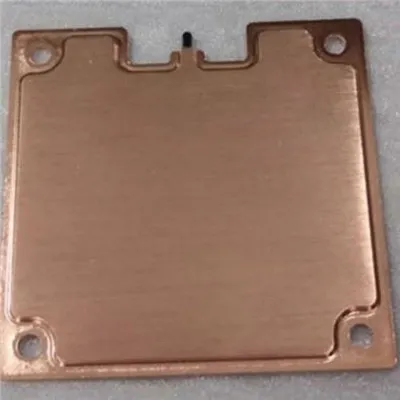
Cooling Air cooling is the most basic heat dissipation method at present. Whether it is a desktop or a notebook, the structure is basically the same: copper tubes, fins, fans, and some high-end cooling modules have a uniform heat plate, but the nature of the uniform heat plate The above is a flat shaped heat pipe, which can be attributed to the heat pipe; according to the previous understanding, the uniform heat plate and the copper pipe are equivalent to "logistics", the fins are the "salesmen", and the fan is the "marketing". They work together. Sell (discharge) the product (heat).
↑A typical air-cooled radiator consists of a uniform heat plate, copper tubes, fins and a fan
Some misunderstandings about air cooling
The author did not pay too much attention to the hardware community this year, so I may be a little unsure about the current situation; but last year, many people in Zhihu and Post Bar were addicted to counting heat pipes, thinking that a radiator with more heat pipes must dissipate heat. This is actually a big misunderstanding; as I said above, the entire heat dissipation system is equivalent to a company, and it needs the cooperation of all links to do its best. When sales and marketing are stubborn, the logistics can be used for the best. Yes, the last unsold items are still thrown in the logistics, and the result is that the heat is piled up in the heat pipe... Similarly, some radiators have large fan fins, but the heat pipe is not strong. This is a strong sales but Logistics can't keep up.
As mentioned at the beginning of this chapter, air cooling is currently the most basic heat dissipation method. Its advantages are obvious: safety, simplicity, low cost, and mature technology.
The shortcomings are also obvious: the noise is difficult to control when running at high load, and there is no super power consumption* ability to cope.
*Super power consumption refers to the design power consumption beyond the heat sink. For example, the design power consumption range of a heat sink is below 200W, and it will face a crash when facing a chip with a power consumption of 300W
Chapter 2 Water Cooling
The essence of water cooling is actually the same as air cooling, except that the heat transfer medium has changed from copper to liquid, but this seemingly little change is the essence of the water cooling system: according to the previous analogy, the air cooling system This company is composed of "logistics" (heat conduction), "sales" (fins), and "marketing" (fans), while water cooling adds a "warehouse" between "logistics" and "sales"。
As we all know, liquid substances such as water have the ability to store heat, so the water cooling system is equivalent to an additional buffer zone on the basis of air cooling:
Factory production products → logistics transportation → warehouse storage → sales
The addition of this warehouse allows the entire heat dissipation module to have the ability to cope with super power consumption. After all, even if the sales capacity is lower than the production capacity for a certain period of time, there is a warehouse in the middle that can always let the products produced during this time be stored first, etc. After the production runaway is over, the inventory will be slowly reduced.
Let’s talk about the difference between one-piece and split-type water cooling:
The main difference between these two things is the water volume and the water flow rate. Let’s talk about the water volume first. The water tank is common in split water cooling. The water capacity of a small water tank is several times larger than that of the whole one, and more water cooling liquid is also available. It means that the heat capacity is greater, which is why the heat rise of the split water is basically very slow. For example: 7820X+1080ti in split water (double 240 rows) baking machine for two hours, the temperature is only more than 70, 20 It took 20 minutes for ℃-50℃, while it took more than an hour for 50℃-70℃, and the heating curve gradually slowed down.
Then there is the water flow rate. At present, the split water standards at home and abroad are basically based on the G1/4 standard. The inner diameter of the water pipe is basically 10mm, and the inner diameter of the water pipe is basically less than 8mm. Then there is the water pump. The integrated water pump is generally integrated in the cold head, which limits the volume of the pump (after all, it is directly pressed on the CPU, and the layout of the memory slot and power supply must be considered). Split water does not have this problem. The pump is independent and can be placed anywhere according to your preferences. There are multiple pumps available and the speed is adjustable; after all, the logistics runs fast. The products from the factory are sent to the warehouse. The speed is faster.
Finally, let’s talk about the advantages and disadvantages of the two types of water cooling.
What needs to be explained is that the water-cooling thing itself has a hidden danger of leaking. No matter the brand and the best craftsmanship, it is inevitable, but in fact, there is no need to worry too much.
The advantages of all-in-one: omission of compensation (most brands are complete machines), installation (relatively) simple, and economical (probably). Disadvantages: Basically ugly, and the pipes are not easy to manage.
The advantages of split type: great heat dissipation effect, high playability, low noise, low-key appearance and cool. Disadvantages: expensive, hand-disabled persuaded to leave, high water leakage potential, difficult to maintain.