Thermal cooling for high power CPU
In recent years, CPU has obviously begun to develop towards multi-core, and the main battlefield in the future will also be multi-core competition. After all, on the premise that the main frequency of CPU can not be greatly improved, we can only rely on multi-core and multi-threaded to improve the operation speed of CPU. Doubling performance will inevitably lead to doubling power consumption, so thermal cooling issue will be a focus of CPU in the future.

Take the second generation of AMD thread Ripper for example. Its specification reaches 32 cores and 64 threads, and the power consumption is as high as 250W. This is twice the power consumption of the previous CPU, and its heat is obviously large.
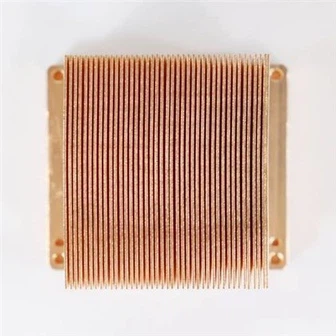
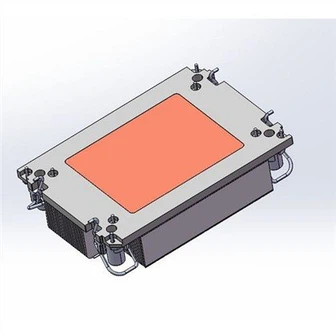
If the power is 250W, there must be a stronger thermal heatsink to suppress it. If you choose air cooling, you can only consider the top ones. The heat dissipation performance is naturally strong, but the price is also high.

In addition to high-end air cooling, integrated liquid cooling can be used. 360 cold exhaust radiator is a common solution. Even so, the temperature of CPU should reach about 80 degrees. The ultimate solution is split liquid cooling.

Air cooling will continue to serve the heat dissipation of low-end CPU. With the continuous development of CPU, low-end air cooling will be phased out and all will be close to the high-end. After all, the heat that low-end air cooling can solve is limited, which will be more and more difficult, just as passive cooling will be eliminated. It is expected that the CPUs above the middle end basically rely on liquid cooling, and the integrated liquid cooling will be more widely used, while the top CPUs can only rely on split liquid cooling.