Vacuum brazing and liquid cooling for heat dissipation, denser waterways, more efficient heat dissipation
Nowadays, liquid-cooled heat sinks have become the first choice for heat dissipation of various high-end electronic technology products, ranging from our common mobile phone notebooks to large professional servers, laser cutting equipment, engines, wind generators, etc.
Whether it is a precision instrument or a high-power heavy machinery, if the heat dissipation is poor, the high temperature will not only reduce the working stability of the chip, but also cause excessive thermal stress due to the temperature difference between the inside of the module and the external environment, which will affect the electrical performance and work of the chip. Frequency, mechanical strength and reliability.
For example, the failure rate of electronic components increases exponentially with the increase of operating temperature. Every time the temperature of a single semiconductor component increases by 10 degrees, the reliability of the system will decrease by 50%. Not only accelerates the service life of the original, but also easily leads to the occurrence of various accidents.
Vacuum brazing is to fill the solder between two mother boards and then place them in a vacuum brazing furnace for heating and welding, which is very suitable for welding heat dissipation plates with dense water channels. However, the vacuum brazing requires a relatively long time, the solder is easy to lose, and it is easy to cause water leakage in the water channel, and the yield is affected by the proficiency of the process.
In vacuum brazing technology, tool steel must be cleaned before brazing. The surface of the cemented carbide should be sandblasted before brazing, or polished with silicon carbide or diamond grinding wheels to remove excessive carbon on the surface, so that it can be wetted by the brazing filler metal during brazing. Cemented carbides containing titanium carbide are more difficult to wet. The copper oxide or nickel oxide paste is deposited on the surface in a new way and baked in a reducing atmosphere to make the copper or nickel transition to the surface, thereby increasing the strength of the brazing The wettability of the material.
When applied to liquid cooling, the advantages of vacuum brazing, which can create dense water channels, energy production, and high efficiency, have been infinitely amplified and become the preferred welding technology for liquid cooling components in various industries.

Application Cases of Vacuum Brazing|Aluminum Soaking Plate:
Aluminium soaking plate (also known as "homogeneous temperature plate") VC (Vapor Chamber), is a new type of heat pipe. The inner wall has a vacuum chamber with a fine structure, and the heat circulates repeatedly through the evaporation and condensation of the internal liquid.
1. Compared with traditional heat pipes, because it truly realizes direct heat transfer on a two-dimensional large plane, the heat transfer efficiency is higher.
2. Aluminum alloy materials and various insulating media can be used. Eliminates potential safety hazards in power-using occasions.
3. Light weight and long life.

Widely used in: radar TR component chip, military equipment chip board electronic components, 5G related fields. Divided into: flat conduction cooling type, forced air cooling type and natural air cooling type.
Application case of vacuum brazing|Copper-aluminum composite radiator:
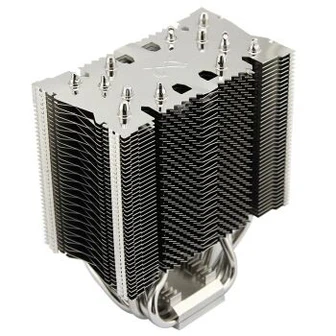
The thermal energy efficiency and density of copper-aluminum materials are quite different. Copper-aluminum composite radiators can use copper materials to directly contact the heat source, and then use aluminum fins to dissipate heat.
Advantages: It can achieve efficient heat absorption/dissipation of the radiator. Small use space, natural air cooling.