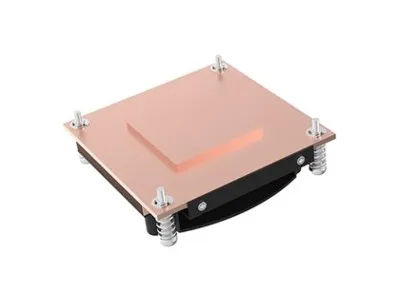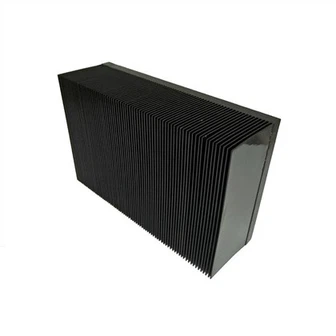
Vapor chamber VS heat pipe
In the ever-evolving landscape of electronic devices, thermal management is a critical consideration to ensure optimal performance and longevity. Two advanced technologies, vapor chambers, and heat pipes, have emerged as front-runners in efficiently dissipating heat from electronic components. This article explores the characteristics, advantages, and applications of vapor chambers and heat pipes, providing insights into the decision-making process for engineers and manufacturers.
Heat Pipes: Harnessing Efficient Heat Transfer
Overview: Heat pipes are heat transfer devices that rely on the principles of phase change to efficiently move heat away from a heat source. Typically composed of a sealed tube with a small amount of working fluid, heat pipes capitalize on the rapid phase transitions between liquid and vapor to transport heat over long distances.
Key Advantages:
High Thermal Conductivity:
Heat pipes boast high thermal conductivity, allowing them to swiftly transfer heat over long distances with minimal temperature gradients. This makes them effective in dissipating heat from hotspots on electronic components.
Passive Operation:
Heat pipes operate passively, requiring no external power source. This inherent simplicity contributes to their reliability and makes them suitable for a wide range of applications, from laptops to spacecraft.
Versatility in Design:
Heat pipes are versatile and can be bent or shaped to fit specific design requirements. This flexibility enables engineers to integrate them into various form factors, making them adaptable for diverse thermal management needs.

Vapor Chambers: Evolving the Concept of Efficient Heat Spreading
Overview: Vapor chambers take the concept of heat pipes a step further by providing a two-dimensional, planar structure for enhanced heat spreading. Comprising a sealed container with a small amount of working fluid and a wick structure, vapor chambers offer efficient heat dissipation across larger surfaces.
Key Advantages:
Effective Heat Spreading:
Vapor chambers excel in spreading heat uniformly across large surfaces. This makes them particularly advantageous in applications where even heat distribution is crucial, such as in high-performance computing systems.
Thin Profile:
Compared to traditional heat sinks, vapor chambers have a thin profile, allowing for more compact and lightweight designs. This is advantageous in applications with space constraints, such as thin and sleek laptops.
Rapid Response to Dynamic Loads:
Vapor chambers exhibit a rapid response to changes in heat loads, adjusting their heat transfer capacity efficiently. This responsiveness is beneficial in scenarios where electronic components experience variable workloads.
Choosing Between Vapor Chambers and Heat Pipes: Application Matters
Considerations:
Surface Area and Uniformity:
Vapor chambers excel in spreading heat over larger surfaces with more uniform temperature distribution. Heat pipes, while efficient, may be more suitable for localized heat dissipation.
Space Constraints:
In applications with limited space, vapor chambers offer a thinner profile. Heat pipes can be bent or shaped, but their cylindrical structure may not be as space-efficient in certain scenarios.
Dynamic Workloads:
For applications with variable heat loads, such as gaming laptops or high-performance servers, the rapid response of heat pipes may be preferable. Vapor chambers are versatile but may not adjust as rapidly to sudden changes in workload.

In the field of advanced thermal management, both vapor chambers and heat pipes offer unique advantages, and the choice between them depends on the specific requirements of the application. Engineers and manufacturers must carefully consider factors such as heat distribution needs, space constraints, and the dynamic nature of workloads to make informed decisions that maximize the efficiency and reliability of electronic devices. As technology continues to advance, these thermal management technologies will likely evolve, offering even more sophisticated solutions for the challenges posed by heat in electronic systems.
As a leading radiator manufacturer, Sinda Thermal can offer wide range of heat sink types, such as aluminum extruded heat sink, skived fin heat sink, pin fin heat sink, zipper fin heatsink, liquid cooling cold plate, etc. Aslo we can provide great quality and outstanding customer service. Sinda Thermal consistently delivers custom heatsinks to meet the unique requirements of various industries.
Sinda Thermal was established in 2014 and has grown rapidly due to its commitment to excellence and innovation in the field of thermal management. The company has a great manufacturing facility equipped with advanced technology and machinery, this ensures that Sinda Thermal is able to produce various types of radiators and customize them to meet the different needs of customers.

FAQ
1. Q: Are you a trading company or manufacturer?
A: We are a leading heat sink manufacturer, our factory has been founded over 8 years, we are professional and experienced.
2. Q: Can you provide OEM/ODM service?
A: Yes, OEM/ODM are available.
3. Q: Do you have MOQ limit?
A: No, we don't set up MOQ, prototype samples are available.
4. Q: What's the lead time of the production?
A: For prototype samples, the lead time is 1-2 weeks, for mass production, the lead time is 4-6 weeks.
5. Q: Can I visit your factory?
A: Yes, Welcome to Sinda Thermal.