Why need a LED cooling technology?
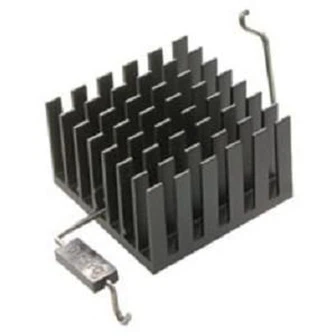
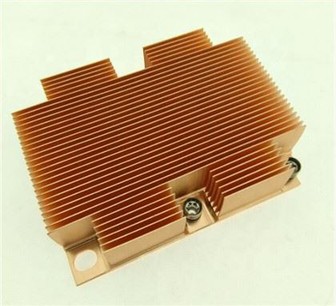
The LED heat cooling technology came out in 2000 and is made of semiconductor light-emitting diodes. The working principle is radiant compounding to generate electroluminescence. It is the most common way of cooling. Aluminum heat sink fins are used as part of the housing to increase the heat dissipation area.
The heat problems
Like traditional light sources, semiconductor light-emitting diodes (LEDs) also generate heat during operation, the amount of which depends on the overall luminous efficiency. Under the action of external electric energy, the radiation of electrons and holes recombine to produce electroluminescence. The light radiated near the PN junction also needs to pass through the semiconductor medium and packaging medium of the chip itself to reach the outside (air). Combining current injection efficiency, radioluminescence quantum efficiency, and external light extraction efficiency of the chip, in the end, only 30-40% of the input electrical energy is converted into light energy, and the remaining 60-70% of the energy is mainly caused by non-radiative recombination of lattice vibration. Form conversion heat
The impact on LED life
Generally speaking, the stability and quality of LED lamps are critical to the heat dissipation of the lamp body. The cooling of high-brightness LED lamps on the market often uses natural heat dissipation, and the effect is not ideal. LED lamps made by LED light sources are composed of LEDs, heat dissipation structures, drivers, and lenses. Therefore, heat dissipation is also an important part. If the LED does not dissipate heat well, its lifespan will also be affected.
Heat management is the main problem in high-brightness LED applications
Because the p-type doping of group III nitrides is limited by the solubility of the Mg acceptor and the higher starting energy of holes, heat is particularly easy to generate in the p-type region, and this heat must pass through the entire structure to be dissipated on the heat sink; The heat dissipation pathways of LED devices are mainly thermal conduction and thermal convection; the extremely low thermal conductivity of the Sapphire substrate material causes the thermal resistance of the device to increase, resulting in a serious self-heating effect, which has a devastating effect on the performance and reliability of the device.
The effect of heat on high-brightness LEDs
Heat is concentrated in a chip with a small size, and the temperature of the chip rises, causing the non-uniform distribution of thermal stress, the luminous efficiency of the chip and the reduction of phosphor lasing efficiency; when the temperature exceeds a certain value, the device failure rate increases exponentially. Statistics show that for every 2°C increase in component temperature, reliability decreases by 10%. When multiple LEDs are densely arranged to form a white light illumination system, the problem of heat dissipation becomes more serious. Solving the problem of heat management has become a prerequisite for high-brightness LED applications.
The relationship between chip size and heat dissipation
The most direct way to increase the brightness of a power LED is to increase the input power, and in order to prevent the saturation of the active layer, the size of the p-n junction must be increased accordingly; increasing the input power will inevitably increase the junction temperature and reduce the quantum efficiency. The increase in the power of a single tube depends on the ability of the device to extract heat from the pn junction, while maintaining the existing chip material, structure, packaging process, current density on the chip and equivalent heat dissipation conditions, the size of the chip and the junction area are increased separately The temperature will keep rising. so the led heatsink is very important for LED industry.