Application of liquid cooling technology in wireless charging device
With the popularization and use of more high-tech electronic products, the use of wireless charging equipment is also increasing rapidly, which leads to higher requirements for the heat dissipation performance of wireless charging equipment. Wireless liquid cooling has a very significant effect in dealing with the heat dissipation problem of high heat flux, which not only miniaturizes the heat dissipation system, but also simplifies its shape and structure, and eliminates the vibration and noise caused by motor operation and forced air cooling. Therefore, liquid cooling is the most commonly used cooling method for charging equipment and electronic devices with high power density and high use frequency, and it is a research hotspot at present.
The thermal management of charging device has always been one of the main applications of modern heat transfer technology. Practice has proved that the efficiency and reliability of electronic devices and circuits are inversely proportional to their temperature. In order to ensure the reliability and service life of the charging device, give full play to its best performance, reasonably design the heat dissipation of the charging device, solve the technical problem of high-density heat dissipation, and adopt effective heat dissipation methods are the technical problems that must be solved at present.

1. Classification and concept of liquid cooling technology:
According to the contact mode, the heat dissipation technology of wireless charging device can be divided into three directions: direct cooling, indirect cooling and system cooling. For most charging devices, the cooling medium can not be in direct contact, and many use the form of indirect cooling. However, the existing indirect cooling technologies have some disadvantages. For example, the air-cooled heat dissipation method with simple structure, low cost and mature technology has the disadvantage of small gas heat capacity. The air-cooled radiator relying only on heat conduction and convection has almost reached the heat dissipation limit (< 100W / cm2), and the high-speed fan produces more noise.
Liquid cooling technology refers to the cooling technology in which the main cooling medium is liquid. The working process is to take the liquid as the carrier to exchange the heat directly or indirectly with the heating components, and the heat is taken away through the evaporation or flow process to reduce the temperature of the heating components.
2. Cooling mode of liquid cooling technology:
Liquid cooling technology usually adopts direct cooling and indirect cooling. Direct cooling is further divided into direct immersion liquid cooling, liquid jet cooling and micro spray cooling. The three are carried out by contact between liquid and electronic devices and then heat conduction.
Direct immersion liquid cooling relies on natural convection cooling, which transfers heat after the coolant is in direct contact with the cold surface of the casing.
The principle of liquid jet cooling and micro spray cooling is to form a thin film on the surface of high temperature, and achieve the effect of thermal control by cooling the liquid or cooling down by heat evaporation. Indirect cooling means that the coolant is not in direct contact with the equipment and electronic devices. Many equipment or electronic device cooling working fluids cannot be in direct contact with it, and the form of indirect cooling needs to be adopted. However, the existing indirect cooling technologies have some disadvantages, such as strict processing requirements and difficult to realize.
3. Research direction of liquid cooling technology:
Microchannel liquid cooling technology
Liquid metal heat dissipation technology
Porous media enhanced heat transfer technology
4. Summary:
Wireless charging equipment is developing rapidly in the direction of high power consumption, small volume, high density and high use frequency. It is urgent to solve the heat dissipation problem of charging device and improve utilization efficiency. Liquid cooling technology plays an irreplaceable role in solving thermal control. It is believed that the utilization prospect of liquid cooling technology will be very broad.
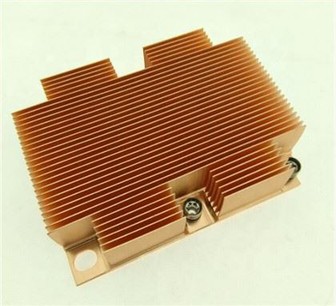
Sinda Thermal has years experience in various liquid cooling solutions, we provided many successful thermal solutions to customer .Besides , we can provide varieties heatsinks and coolers which inlcuding aluminum extruded heatsink, high performance heatsink, copper heatsink, skived fin heatsink, and heat pipe heatsink widely used in many application fields. please contact us if you have any questions about thermal solution.
website: www.sindathermal.com
contact:castio_ou@sindathermal.com
Wechat: +8618813908426