

Application of New 3D Printing Technology in Liquid Cooled Plate Field
Liquid cooling is more expensive than air cooling. Therefore, there are many studies on maximizing investment when making conversions. The internal structure of the server liquid cooling plate has a significant impact on the heat transfer efficiency. The optimal design can maximize the heat exchange area between the cooling plate and hot components such as CPU or GPU, thereby ensuring efficient heat transfer.

For example, microchannels or fins inside the cold plate can enhance the diffusion of heat, thereby achieving better heat dissipation performance. The flow pattern and turbulence induced characteristics inside the cold plate are carefully designed to ensure that the coolant effectively absorbs and removes heat. Maximizing contact surface area, increasing surface area, optimizing flow patterns, and selecting appropriate thermal conductive materials can all improve cooling performance.
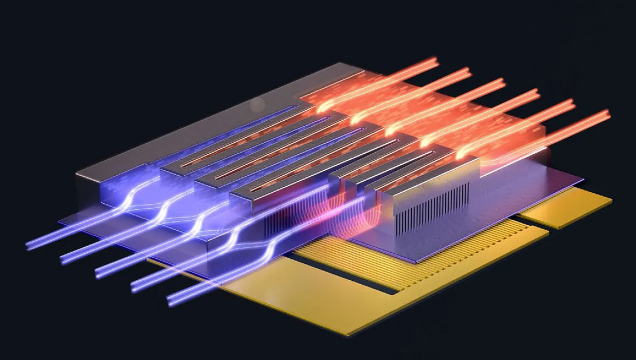
The main effective cooling method currently used in data centers is cold plate , and the corresponding liquid cooled plates mostly use microchannels with 100 micron fins. Metal additive manufacturing can produce these types of designs, usually at a higher cost than direct microchannels. The traditional additive manufacturing method is used to print more complex designs and requires powder removal before use. By utilizing its electrochemical additive manufacturing technology, no powder is required, so it can be used for cooling solutions.
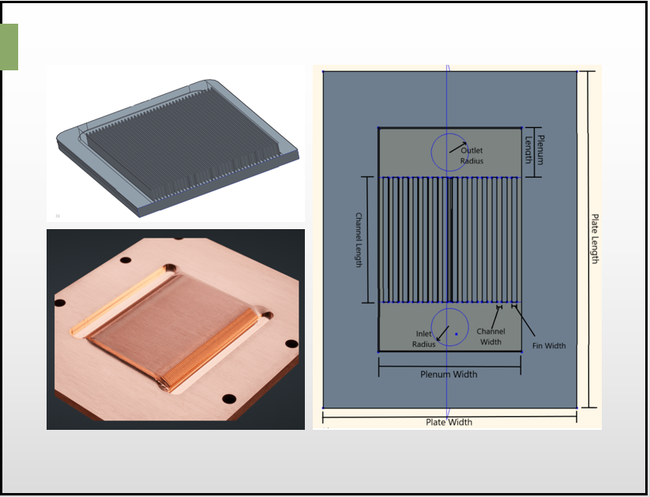
3D printing enables precise design of complex geometric shapes within a cold plate, such as three period minimum surface (TPMS) lattice microchannels and turbulence induced features. This allows for the creation of complex customized structures, optimizing the heat exchange between the internal structure of the cold plate and the coolant.

More efficient liquid cooled cold plates can help improve performance and reduce cooling costs, especially as the next generation of chips approaches 500W TDP CPUs. In terms of AI accelerators, we have seen designs for 1kW accelerators per socket. Two CPUs, eight accelerators, along with network and memory, will mean that each node system is>10kW. Liquid cooling is required.


