cell phone cooling knowledge
Why is mobile phone cooling system becoming more and more important?First, the performance of mobile phone processors soars every year. With the improvement of mobile phone performance, it also inevitably brings the problem of mobile phone heating. Secondly, 5G mobile phones need to add more antennas to receive signals. At the same time, the data transmission of high-speed network also increases the heat of mobile phones.

On the other hand, the mainstream materials used in mobile phones are glass, and the heat dissipation speed of glass is significantly slower than that of metal. Moreover, the internal components of flagship mobile phones are stacked more and more compact, such as mobile phone screen, rear image system and mobile phone battery, which put forward higher requirements for the heat dissipation capacity of mobile phones.

From all aspects, the mobile phone equipped with heat dissipation system is the rigid demand of most 5g flagship, which is also the trend of the mobile phone industry. What are the current heat dissipation technologies?
1. The liquid cooling and heat dissipation of mobile phones depends on an element called "heat pipe". In essence, it is a hollow closed pipe containing liquid. The liquid evaporates and absorbs heat in the evaporation section of the pipeline and becomes a gas. It condenses into liquid and releases heat in the condensation section of the pipeline.

The advantages of heatpipe cooling heat dissipation are long service life and flexible setting. Heatpipe cooling can be placed in any position that needs heat dissipation inside the mobile phone. At the same time, because the technology is relatively mature, the cost is relatively small.
2. Graphene is a kind of material obtained by chemical reaction from graphite material, which enjoys the reputation of "black gold" and so on. Graphene material has high temperature resistance, good thermal conductivity and chemical stability. At present, it is the most cost-effective mobile phone heat dissipation material.

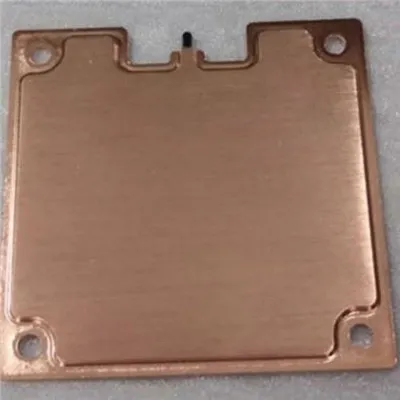
3. Vapor Chamber cooling, also known as vacuum cavity soaking plate heat dissipation technology, is a vacuum cavity with fine structure on the inner wall, which is usually made of copper. When the heat is transferred from the heat source to the VC cavity, the coolant in the cavity begins to produce gasification phenomenon after heating, and the liquid gasification absorbs heat. The condensed coolant will return to the heat source in the steam through the microstructure capillary pipe (the driving force of the whole cycle is capillary force). This process can be repeated continuously.

Vapor Chamber is the latest third-generation heat dissipation technology at present, which can be regarded as the upgrading technology of heatpipe cooling. Although both of them are based on the principle of gas-liquid phase change, the difference is that the heat pipe has only one direction of effective thermal conductivity, while VC is upgraded to the whole surface, which can quickly take away heat from all directions.